Original: $5,325.70
-70%$5,325.70
$1,597.71The Story
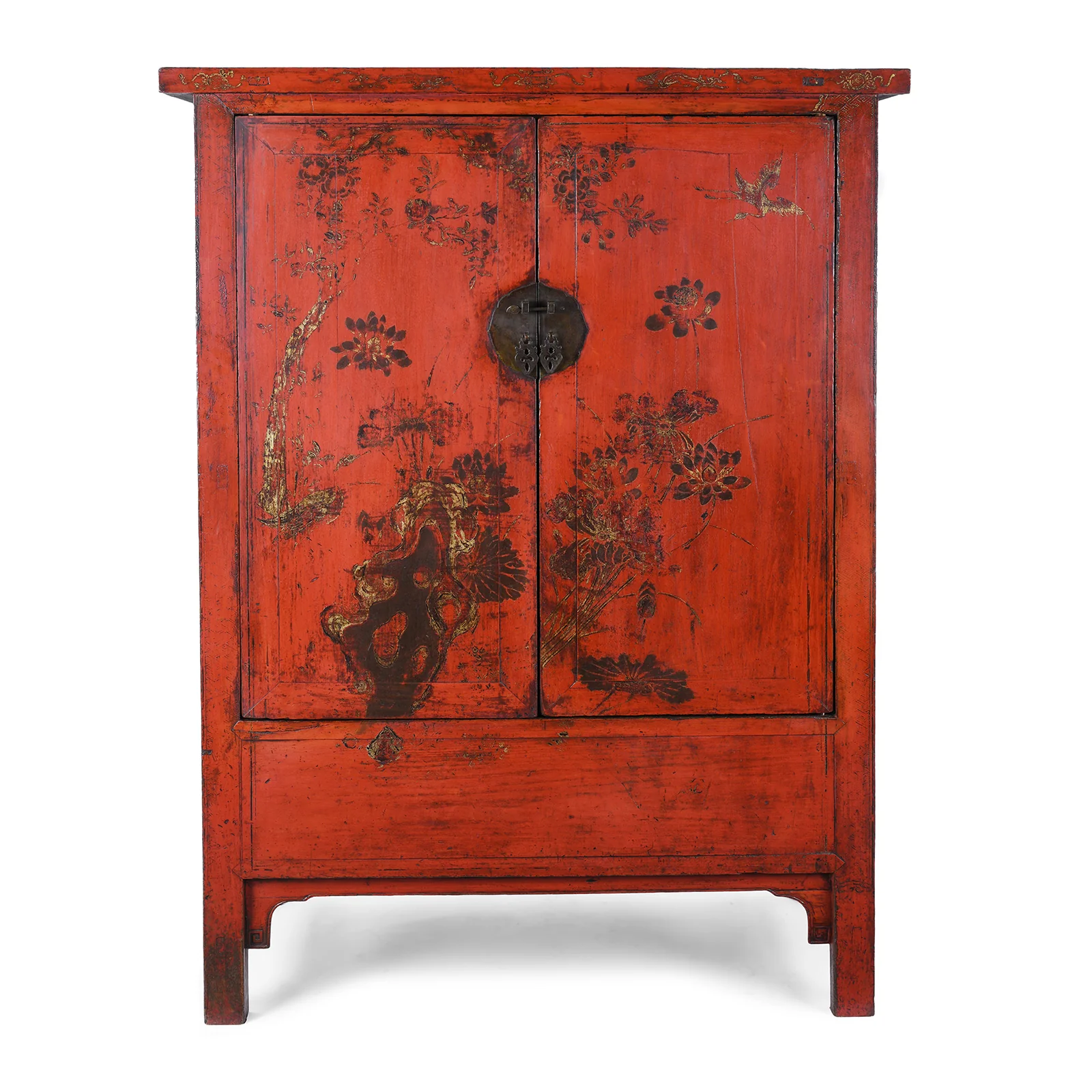
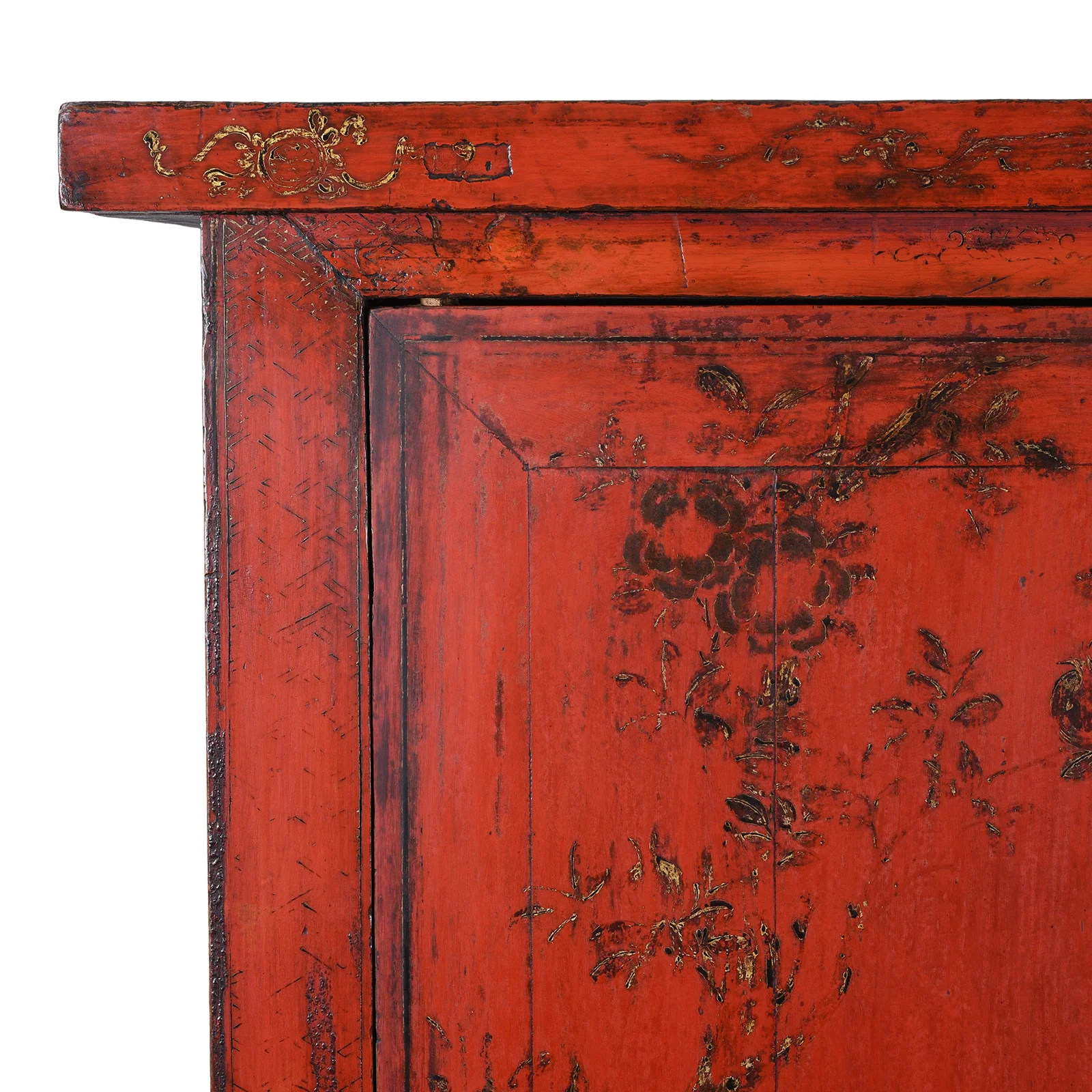
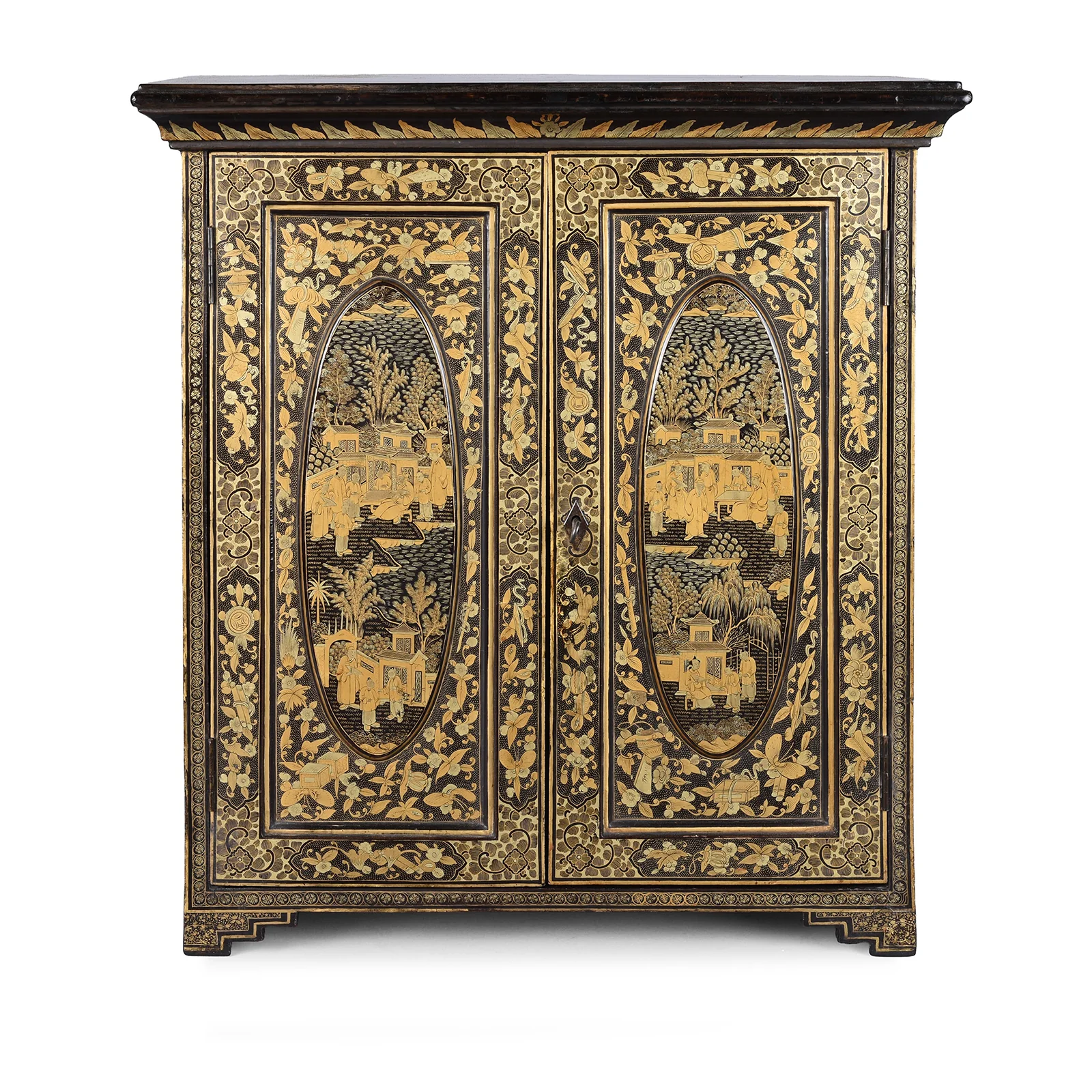
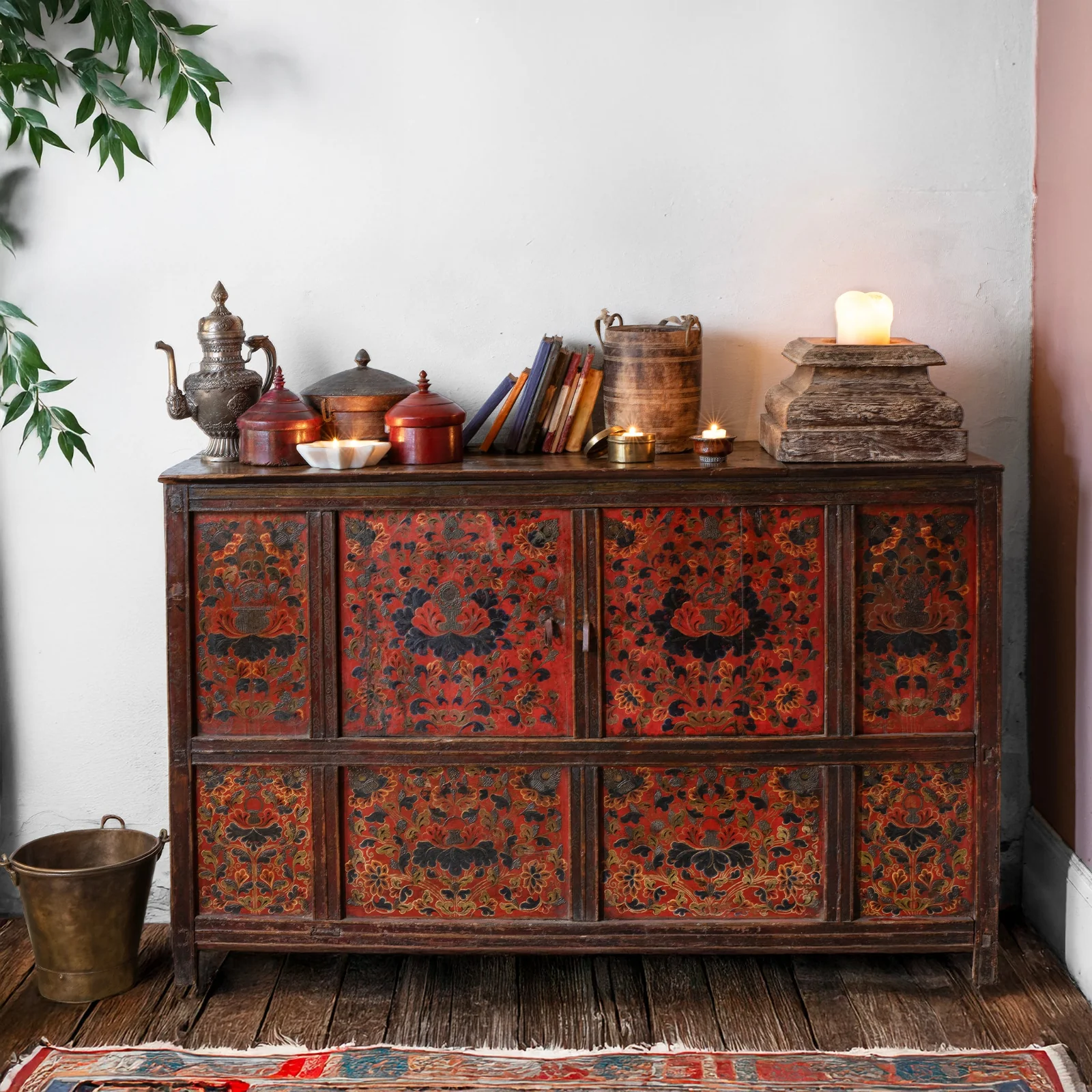
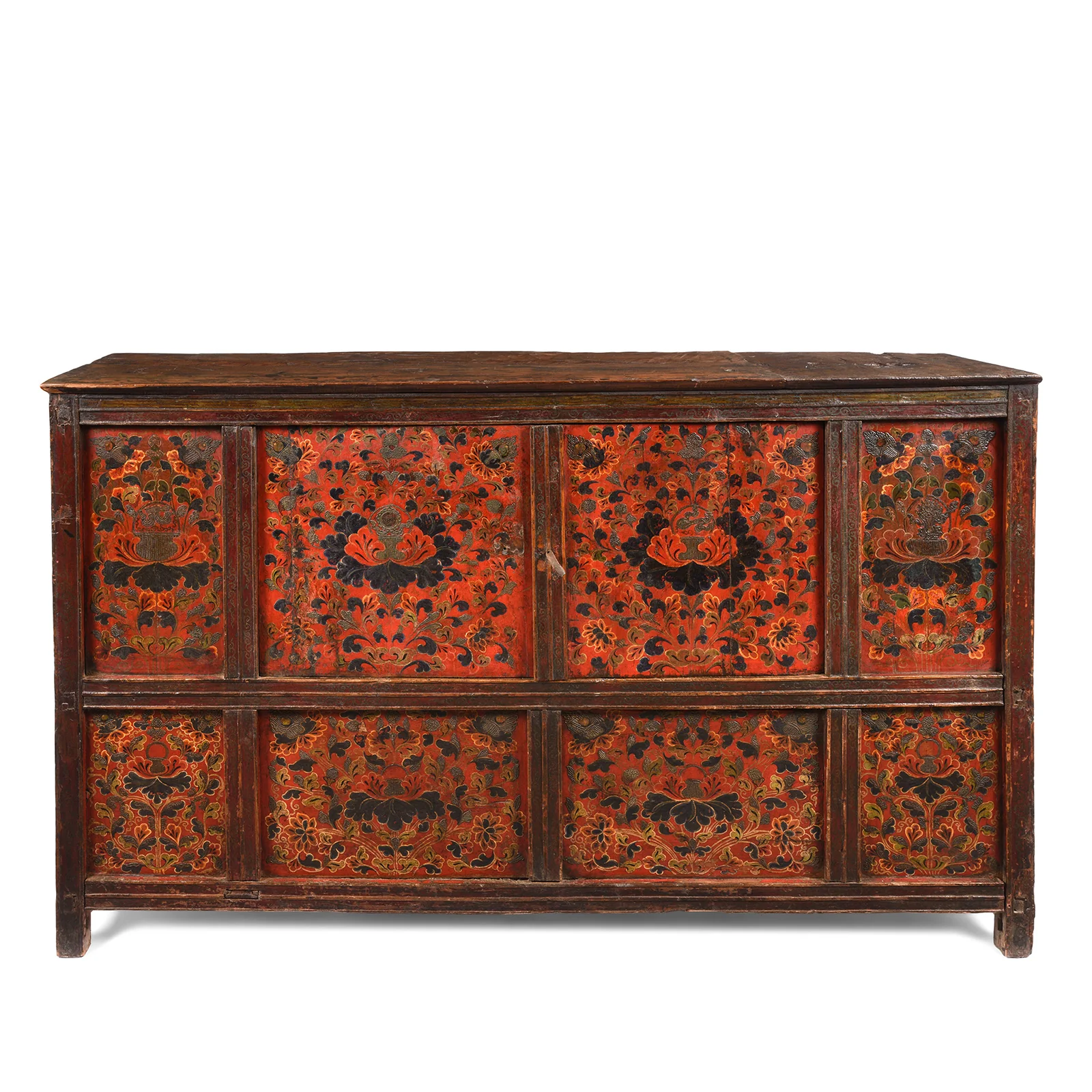
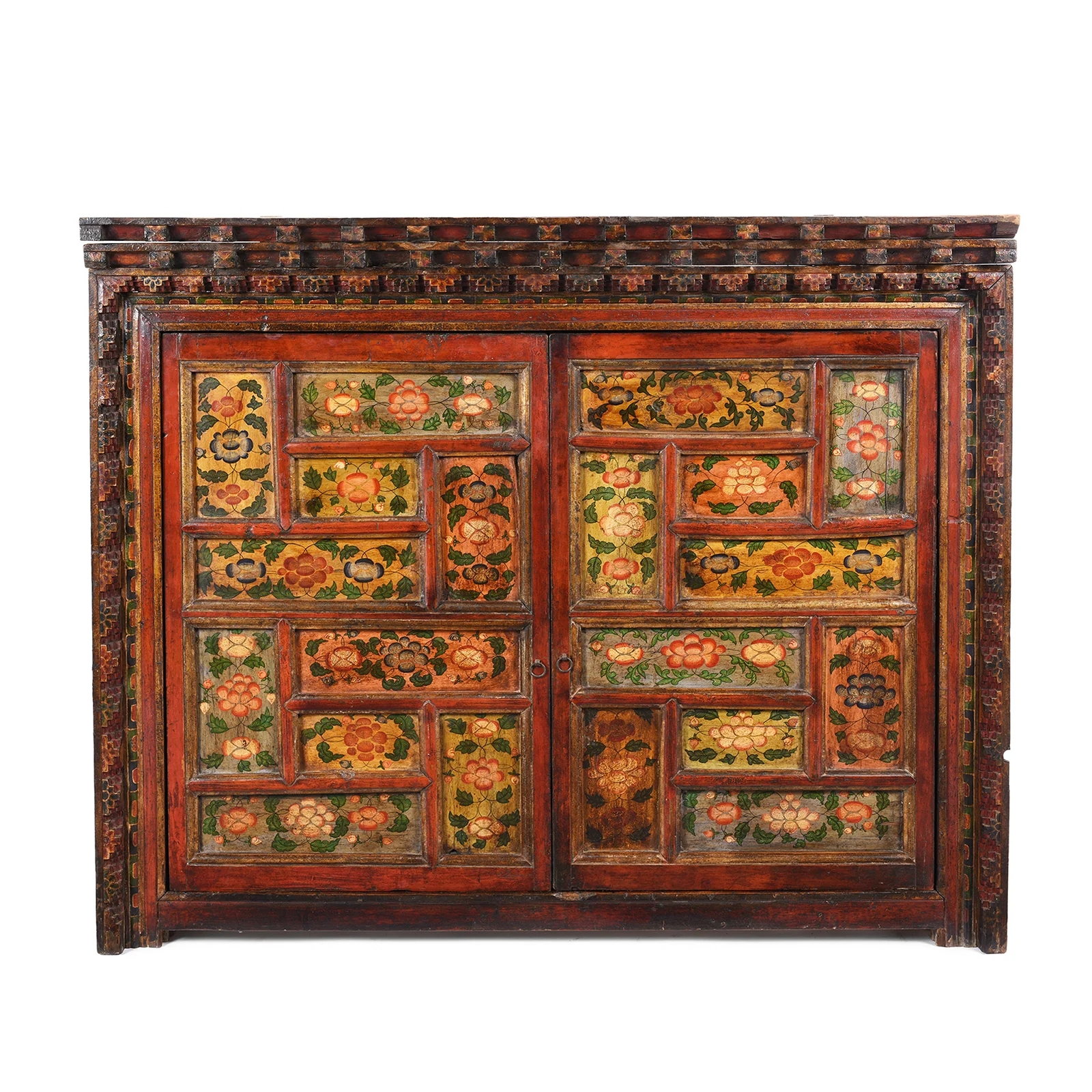
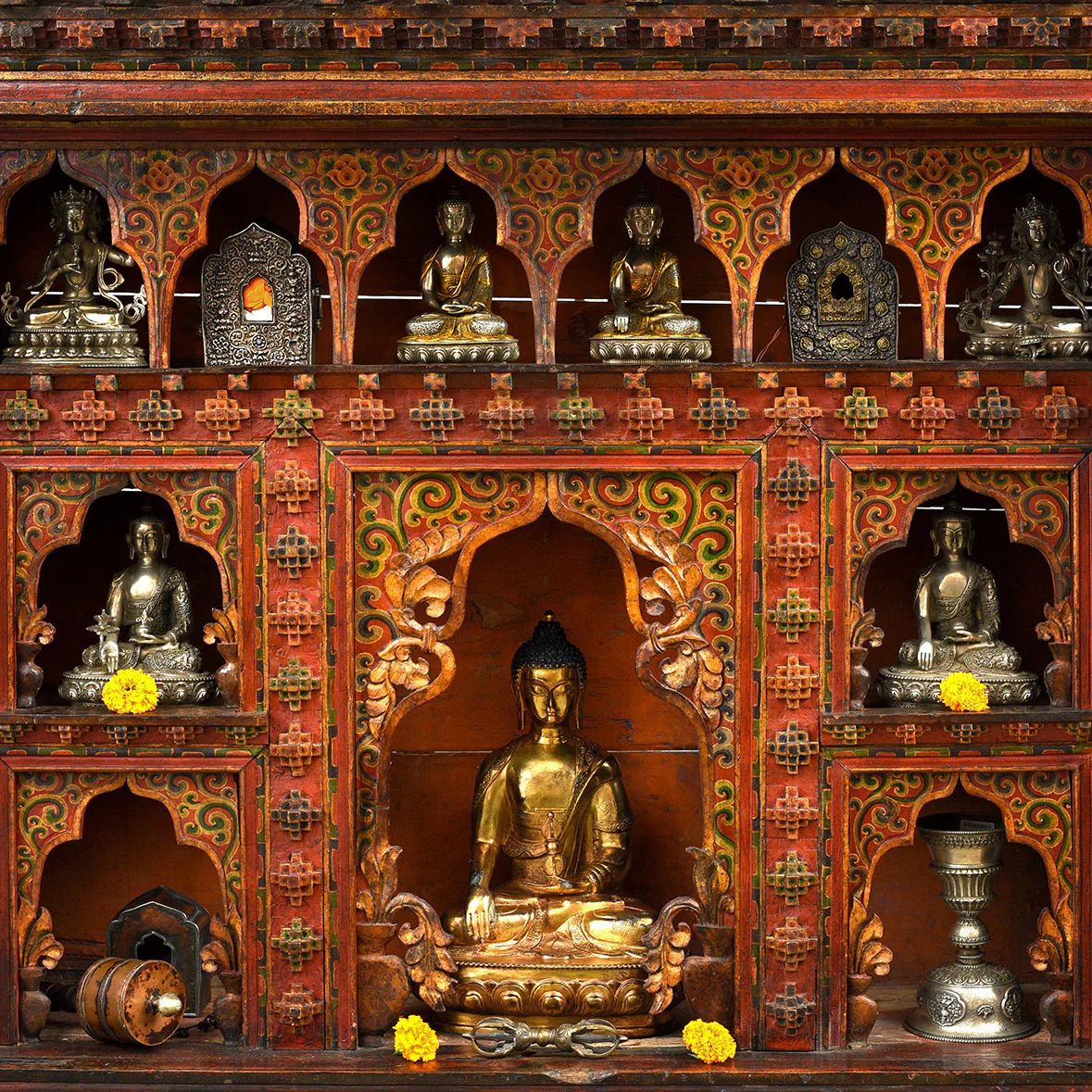
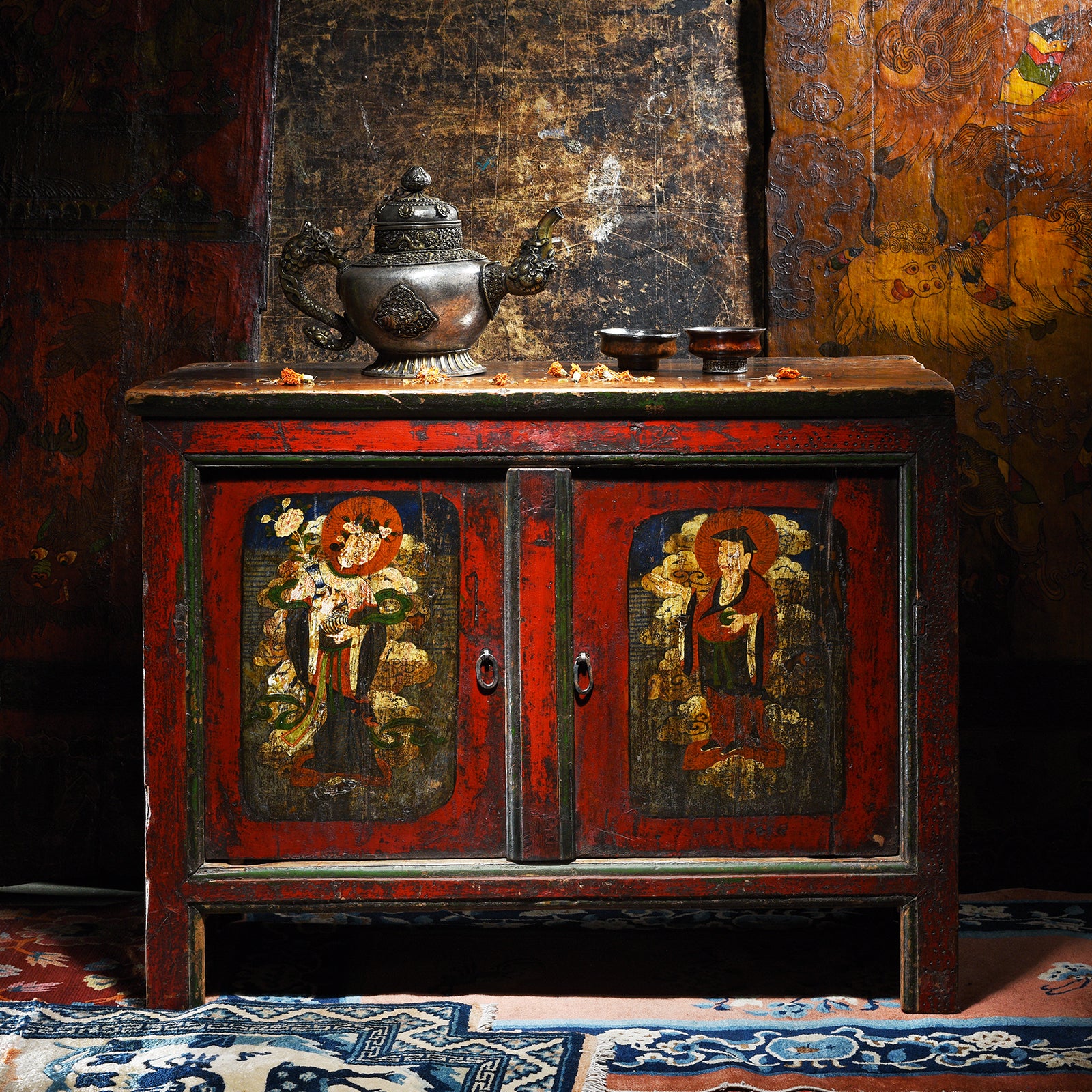
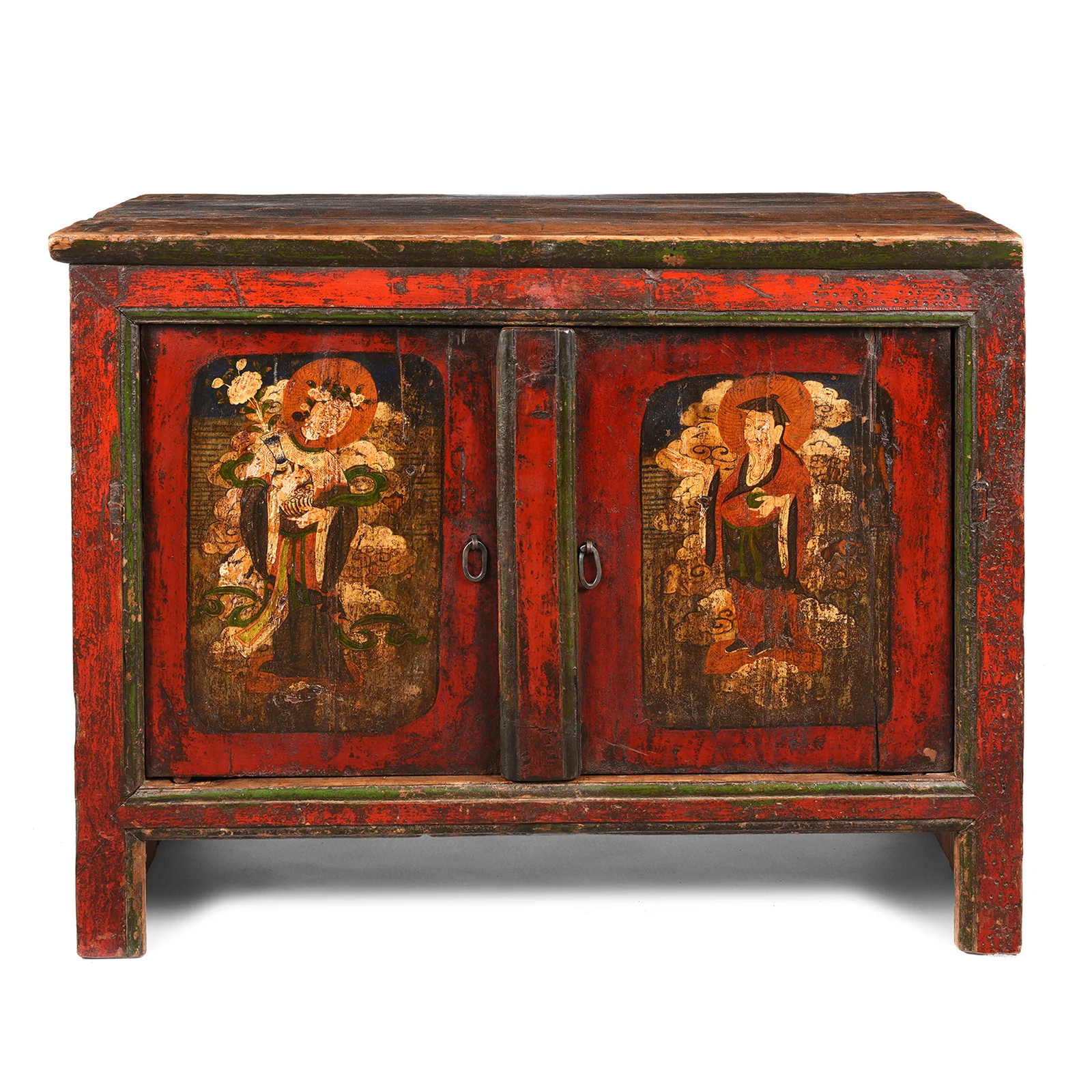
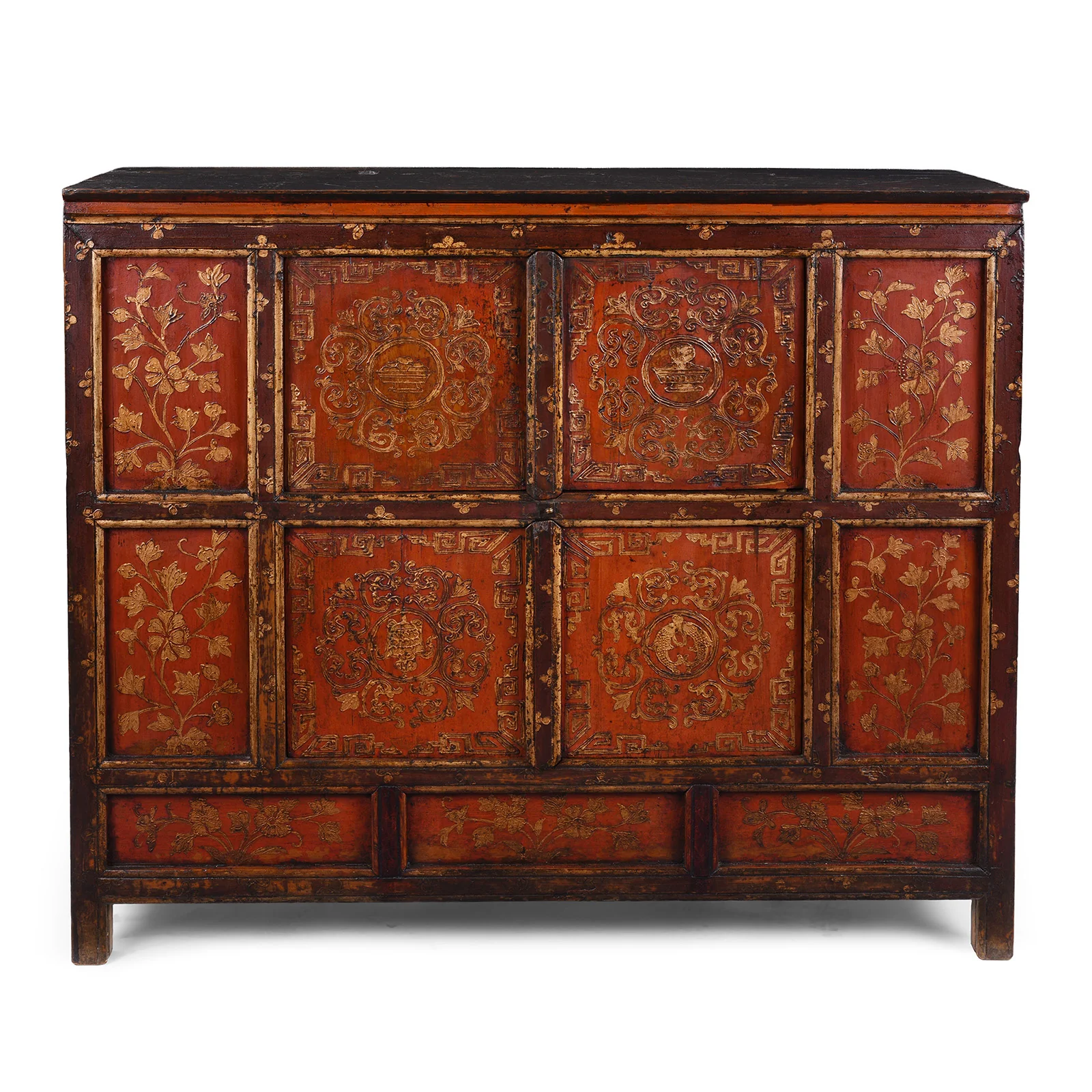
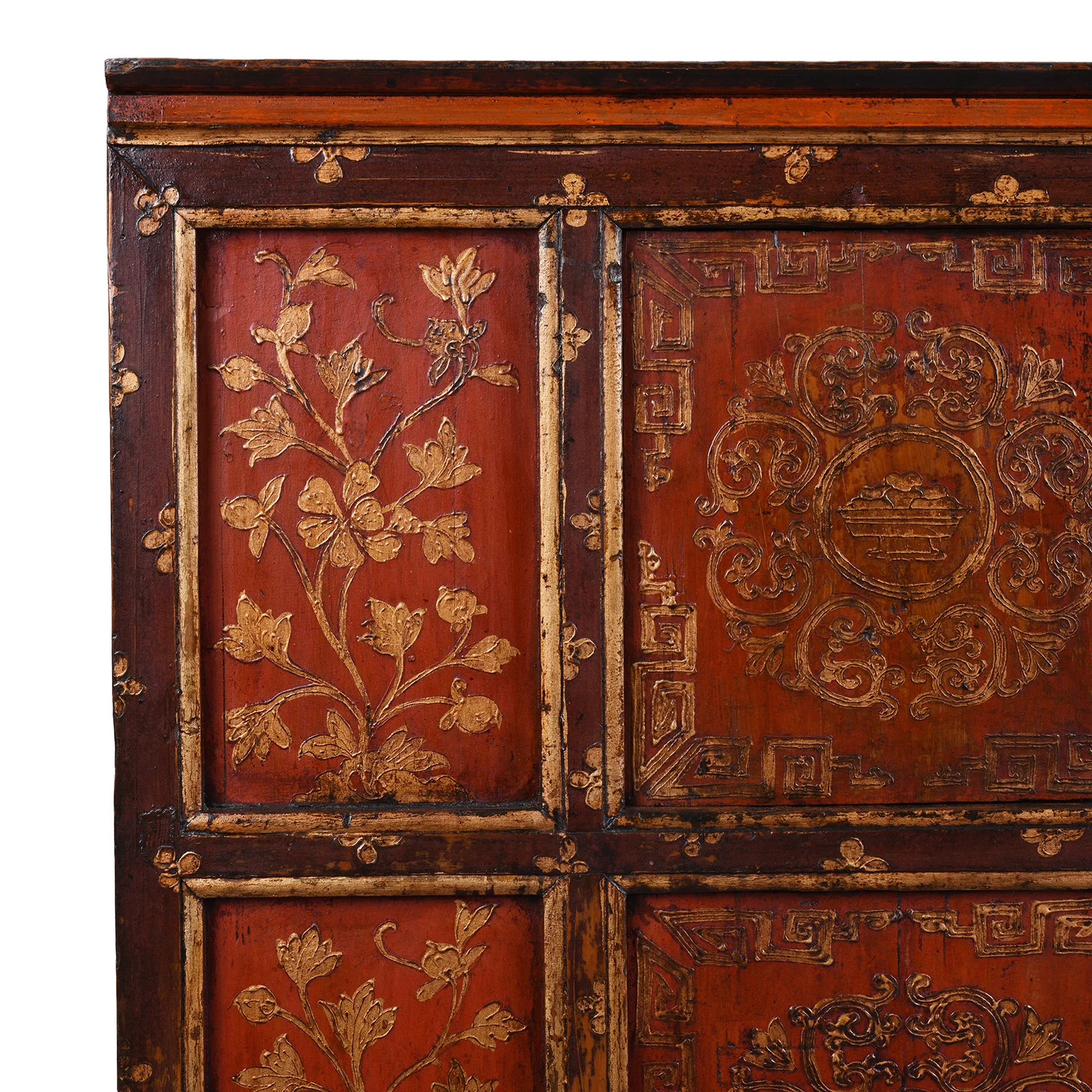
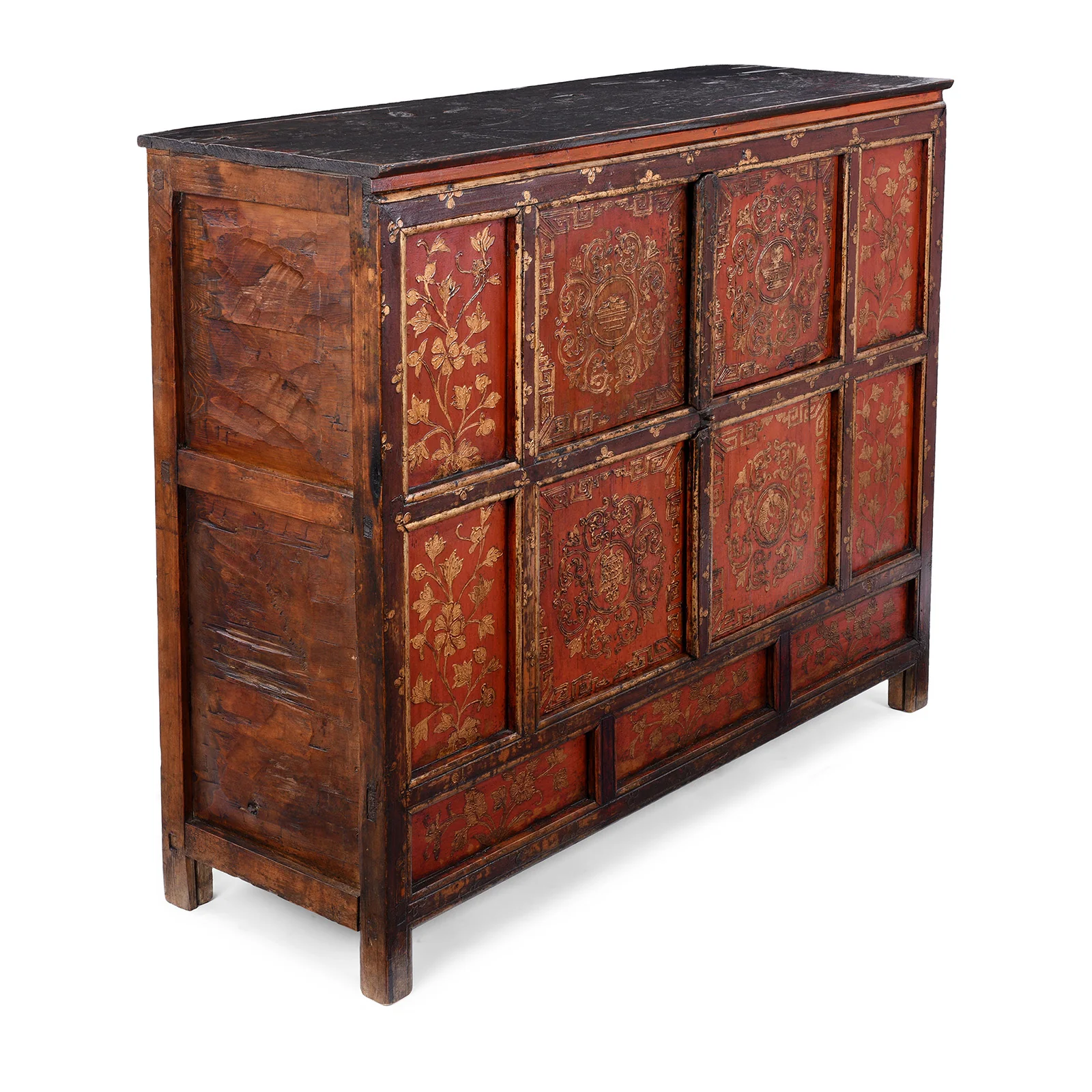
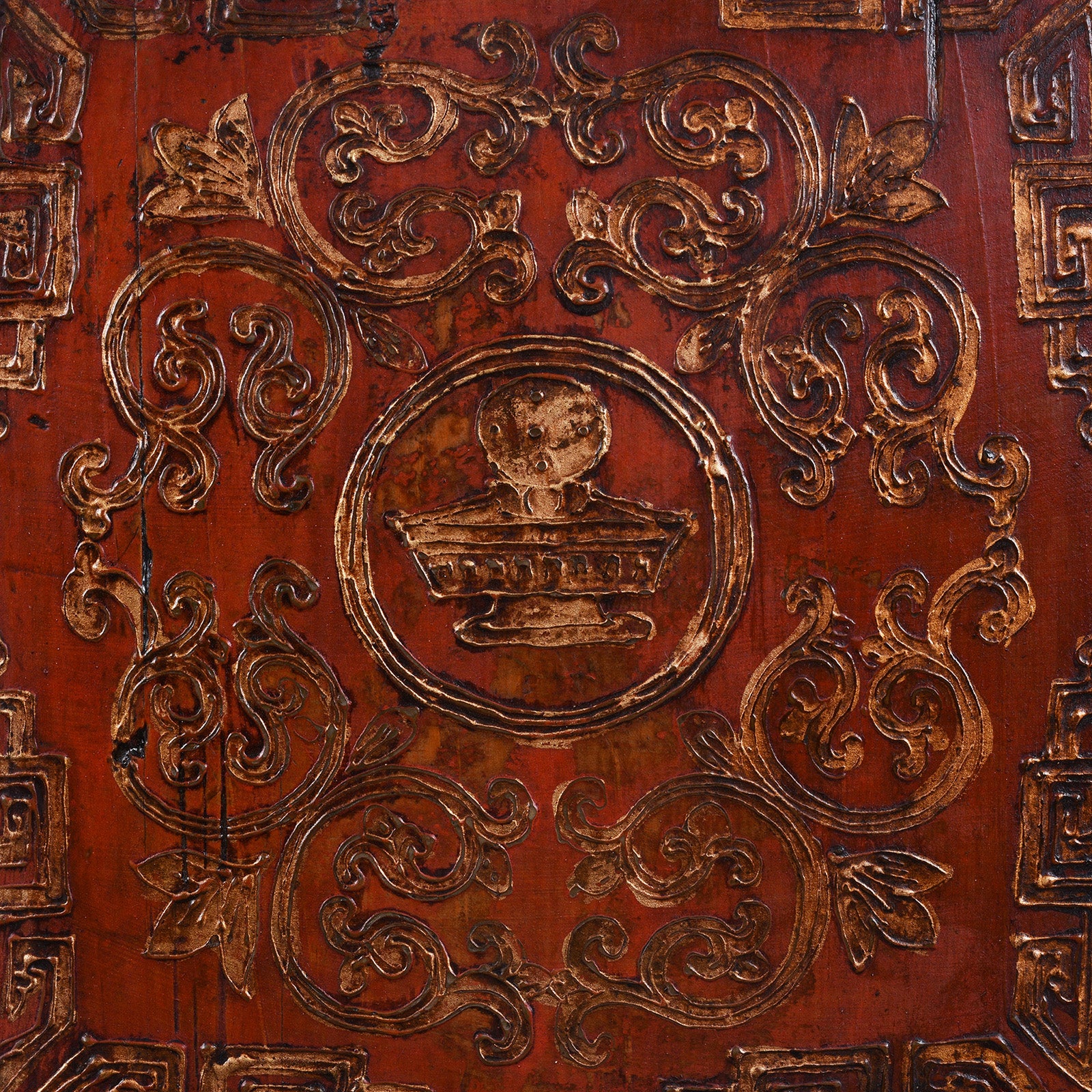
This atmospheric Tibetan altar cabinet, dating from the 19th century, is a superb example of Central Tibetan painted furniture created for household Buddhist practice. Its deep red ground is enriched with luminous gold decoration, much of it executed in kyungbur — the raised gesso technique used in thangka art to give sacred motifs a subtle sculptural relief. The colour palette itself carries strong symbolic meaning: red represents vitality, protection, and the life-force, while gold signifies enlightenment, merit, and auspicious blessing.
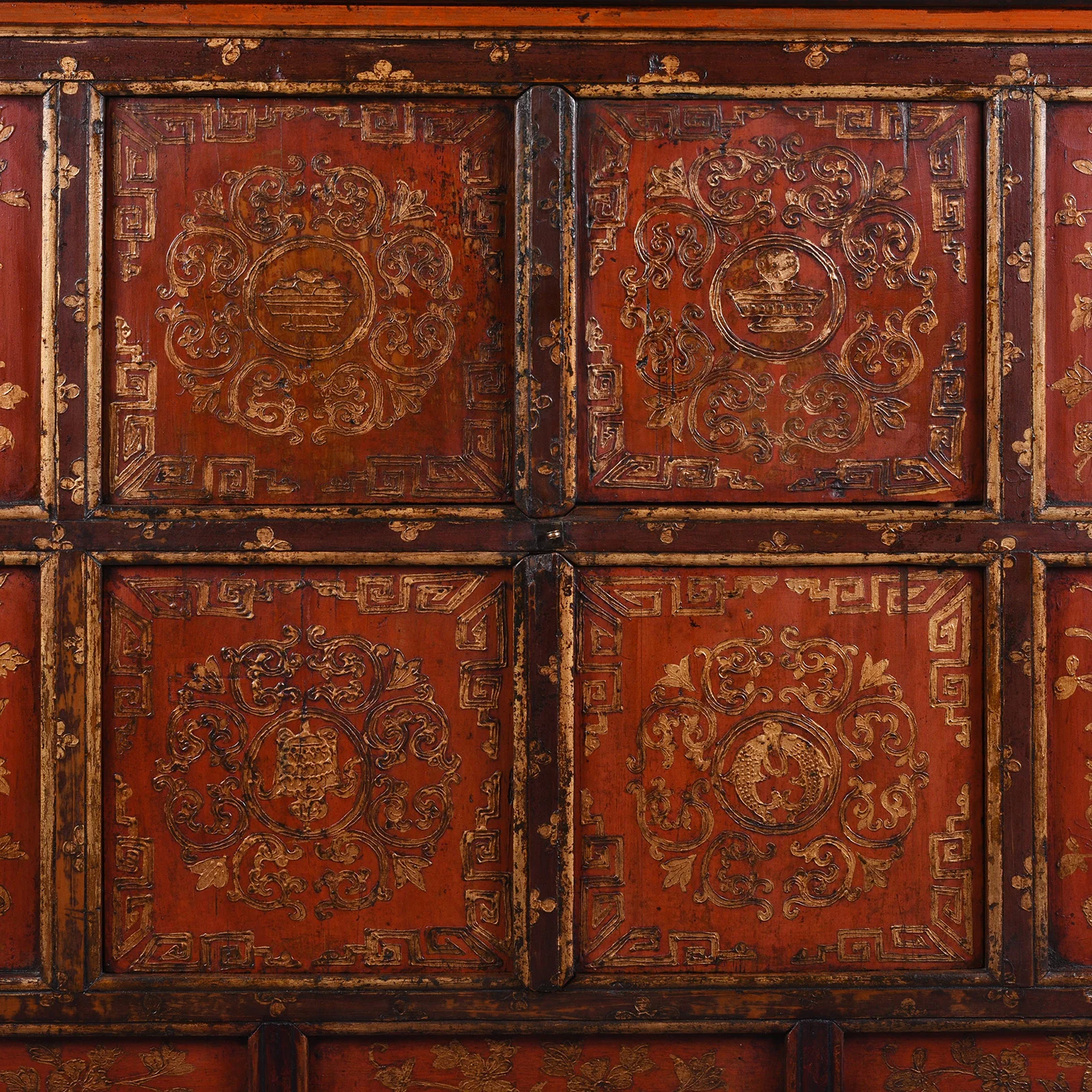
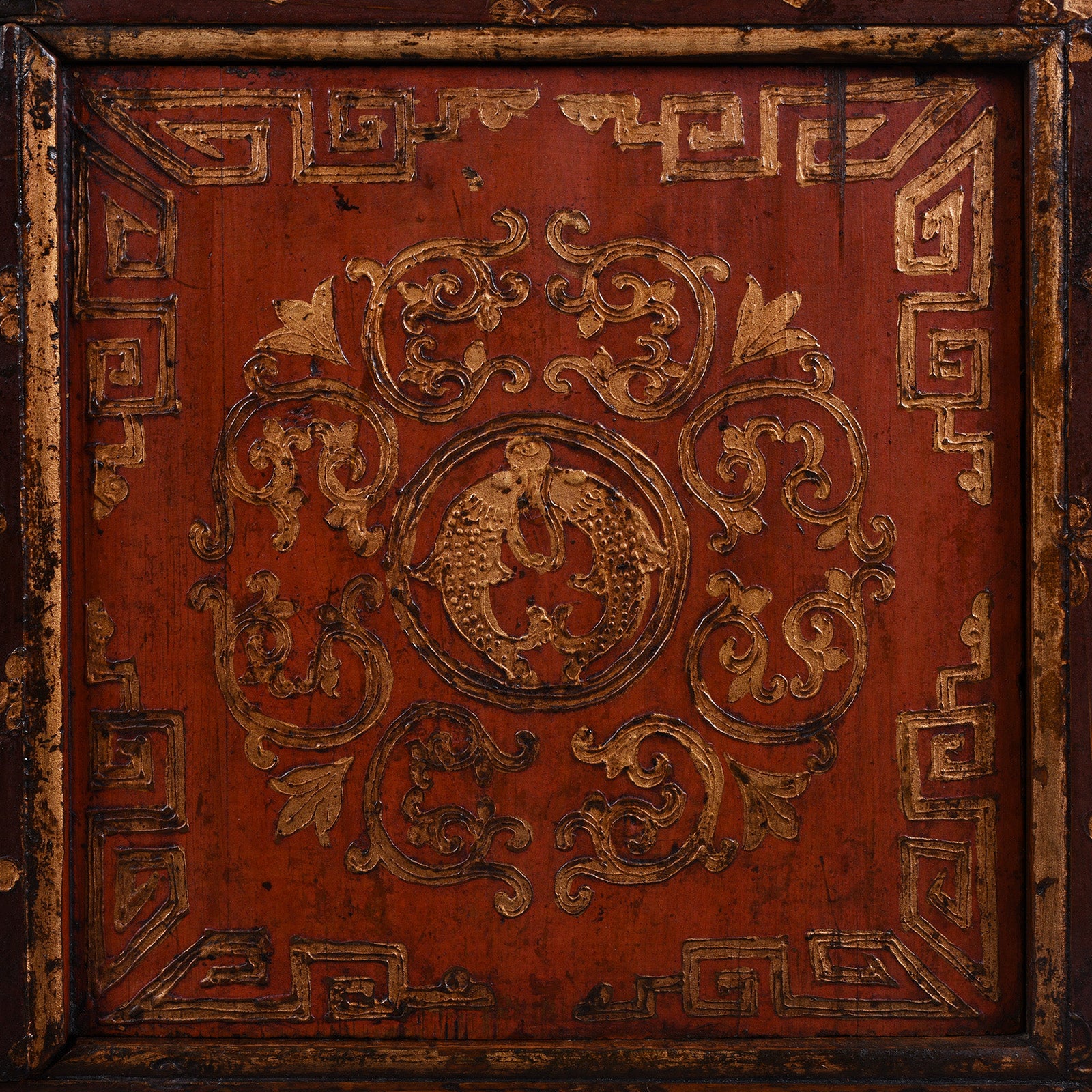
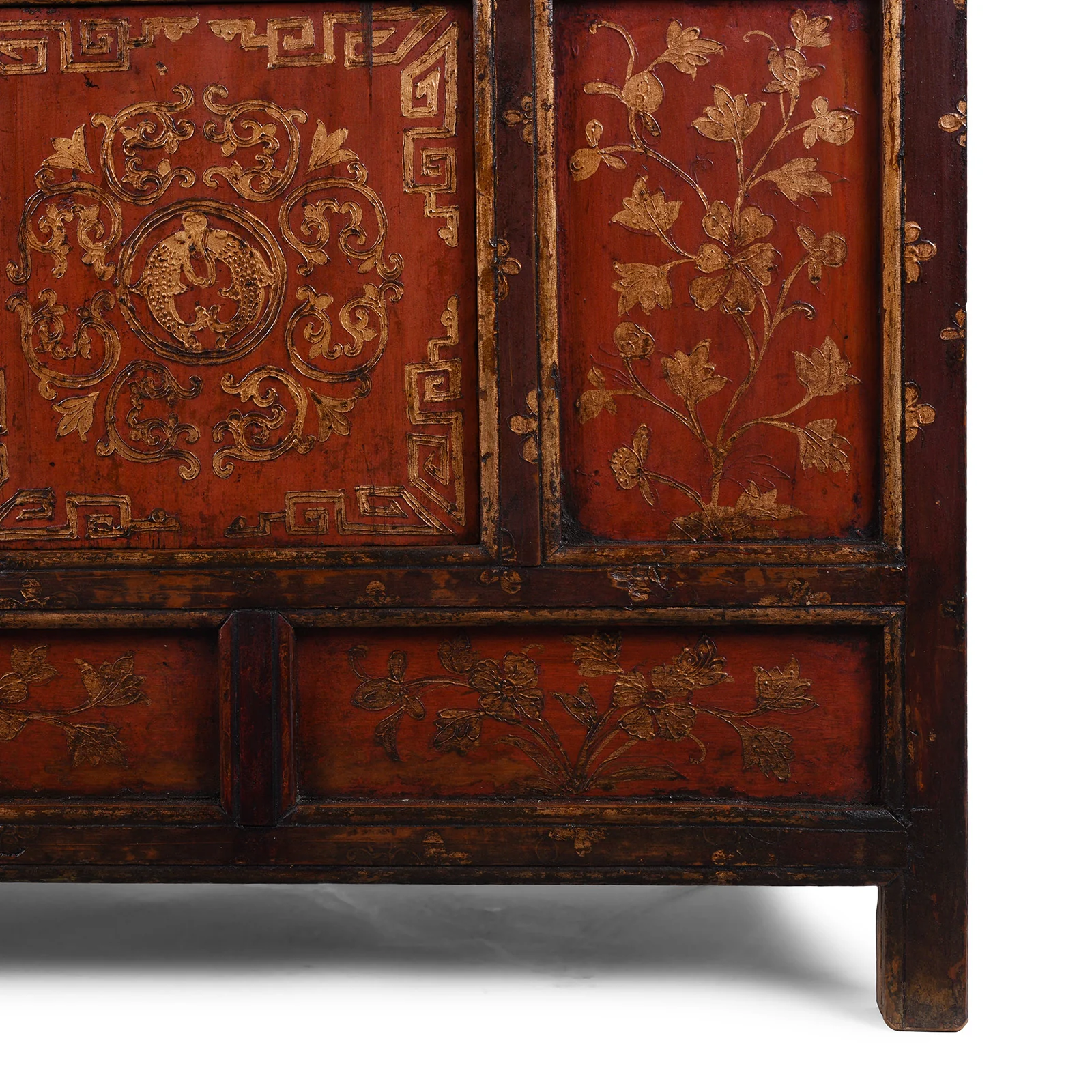
The four central roundels contain a rare mixed set of auspicious emblems drawn from both the Eight Auspicious Substances (bkra shis rdzas brgyad) and the Eight Auspicious Symbols (bkra shis rtags brgyad). The top left roundel shows the Precious Medicine — a raised pellet resting on a tiered dish — symbolising vitality, healing, and longevity. The top right depicts the Auspicious Mirror, representing clarity, wisdom, and the cutting of illusion. Below, the bottom left shows the Parasol (gdugs), an emblem of protection, while the bottom right contains the Golden Fish (nya), symbolising liberation and fearlessness. These roundels are framed by scrolling goldwork and flanked by vertical panels painted with flowering prunus branches — plum or peach blossom — an auspicious motif associated with renewal, resilience, and long life.
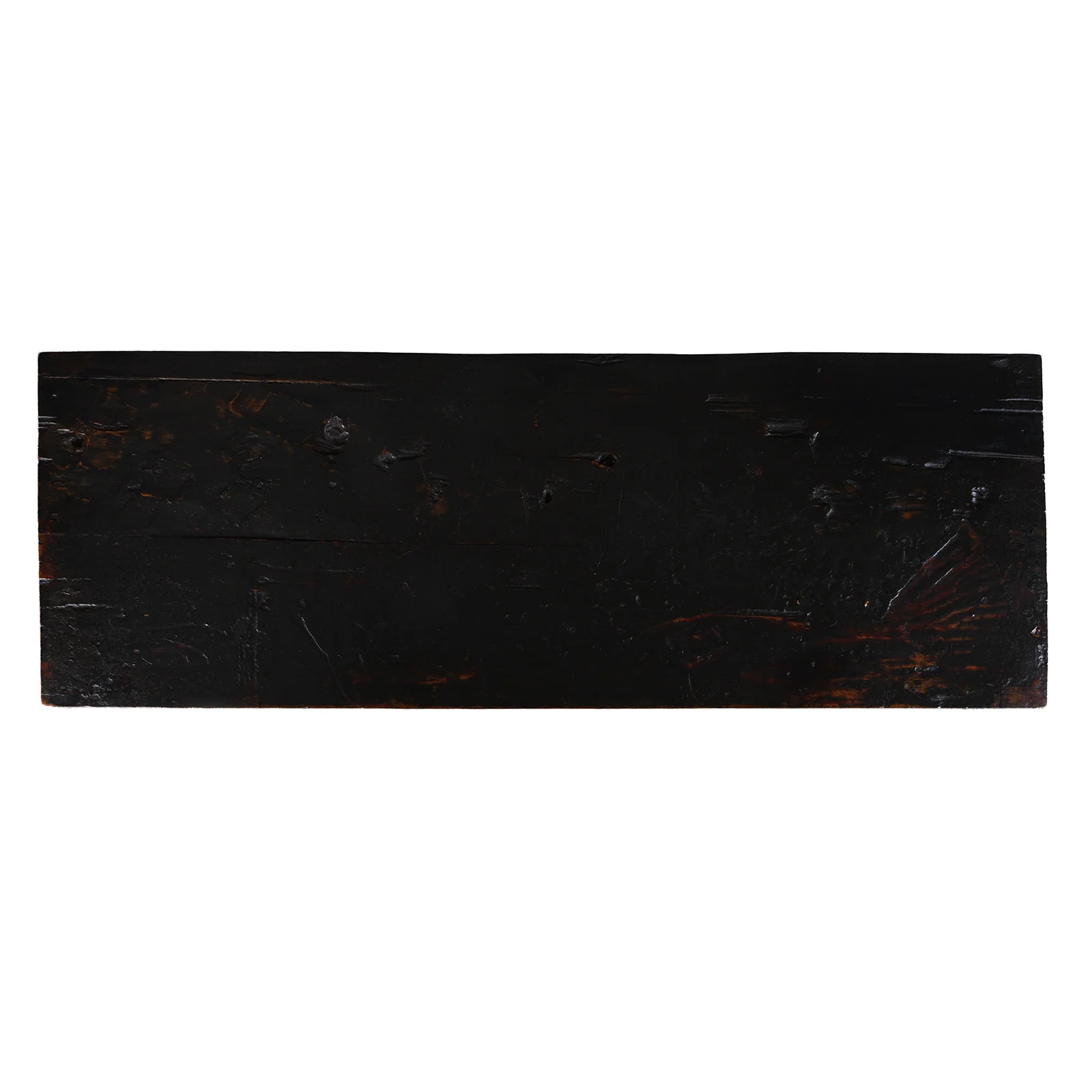
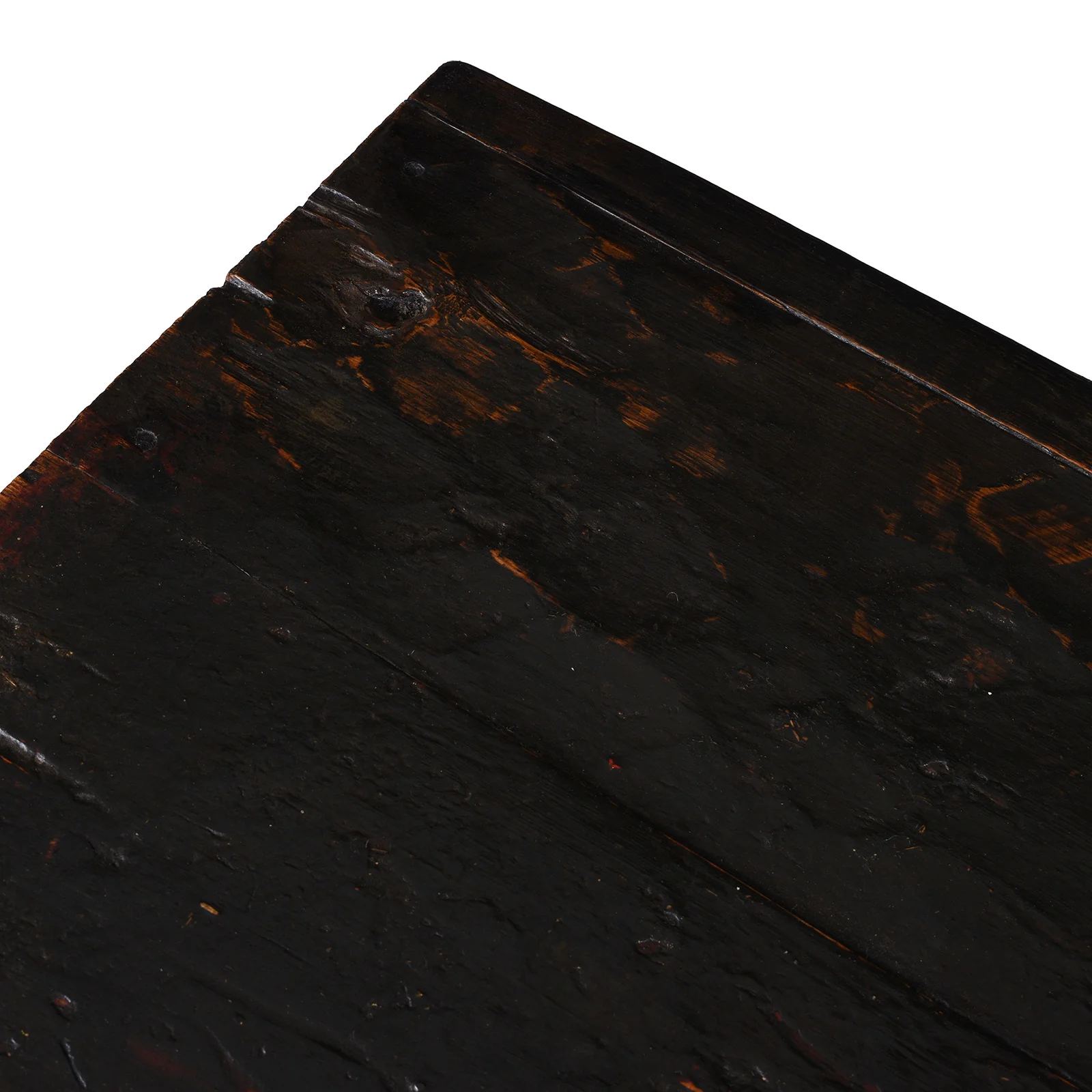
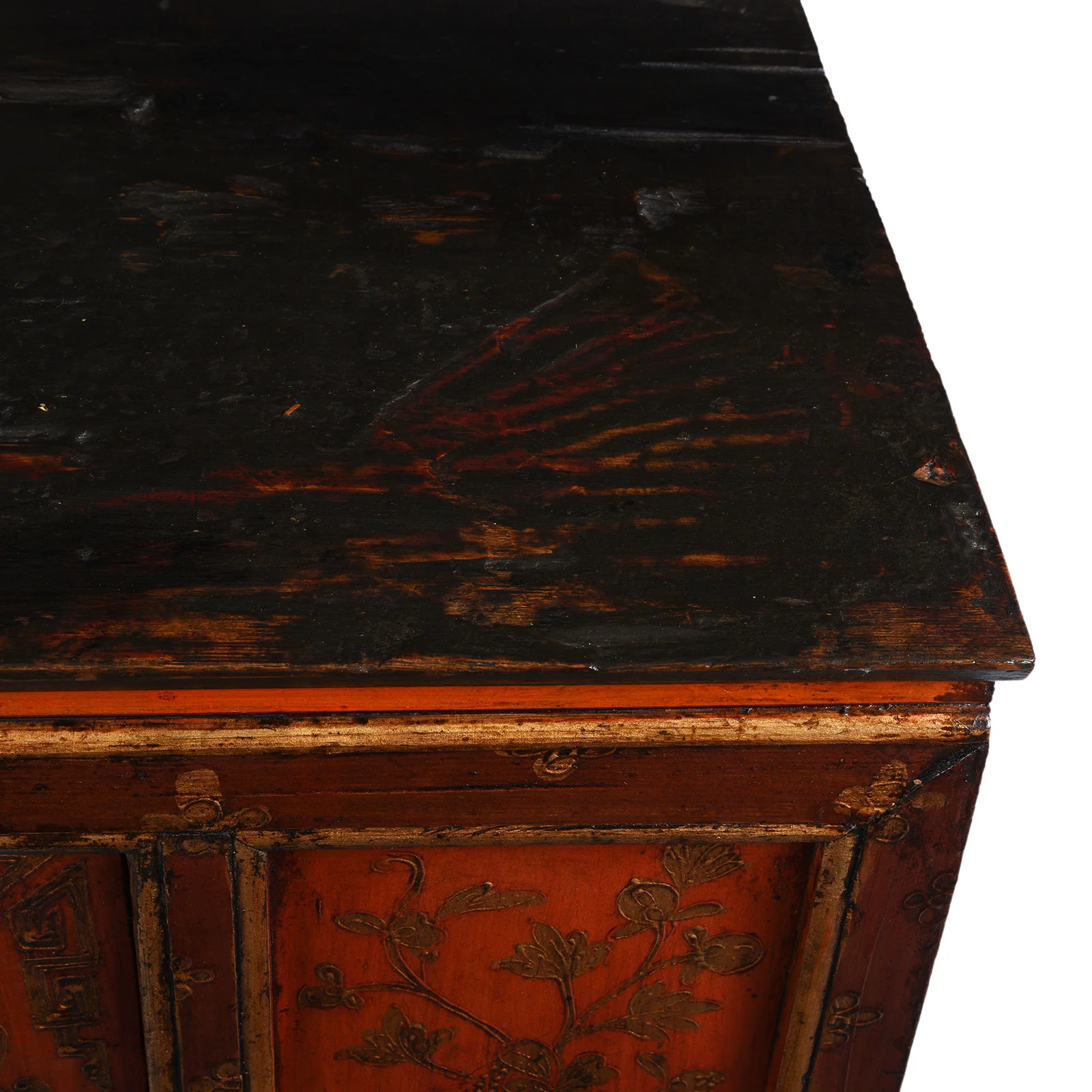
The cabinet retains its original, richly worn surface, with the warm patina and age-softened pigment characteristic of genuine 19th-century Tibetan devotional furniture. Authentic painted altar cabinets of this calibre have become increasingly scarce, and this example — with its complex iconography, kyungbur relief work, and beautifully preserved red-and-gold palette — is a rare and highly collectable survivor.
- Origin: Central Tibet
- Date: 19th century
- Materials: Cedar or pine with original red lacquer and gold-painted decoration
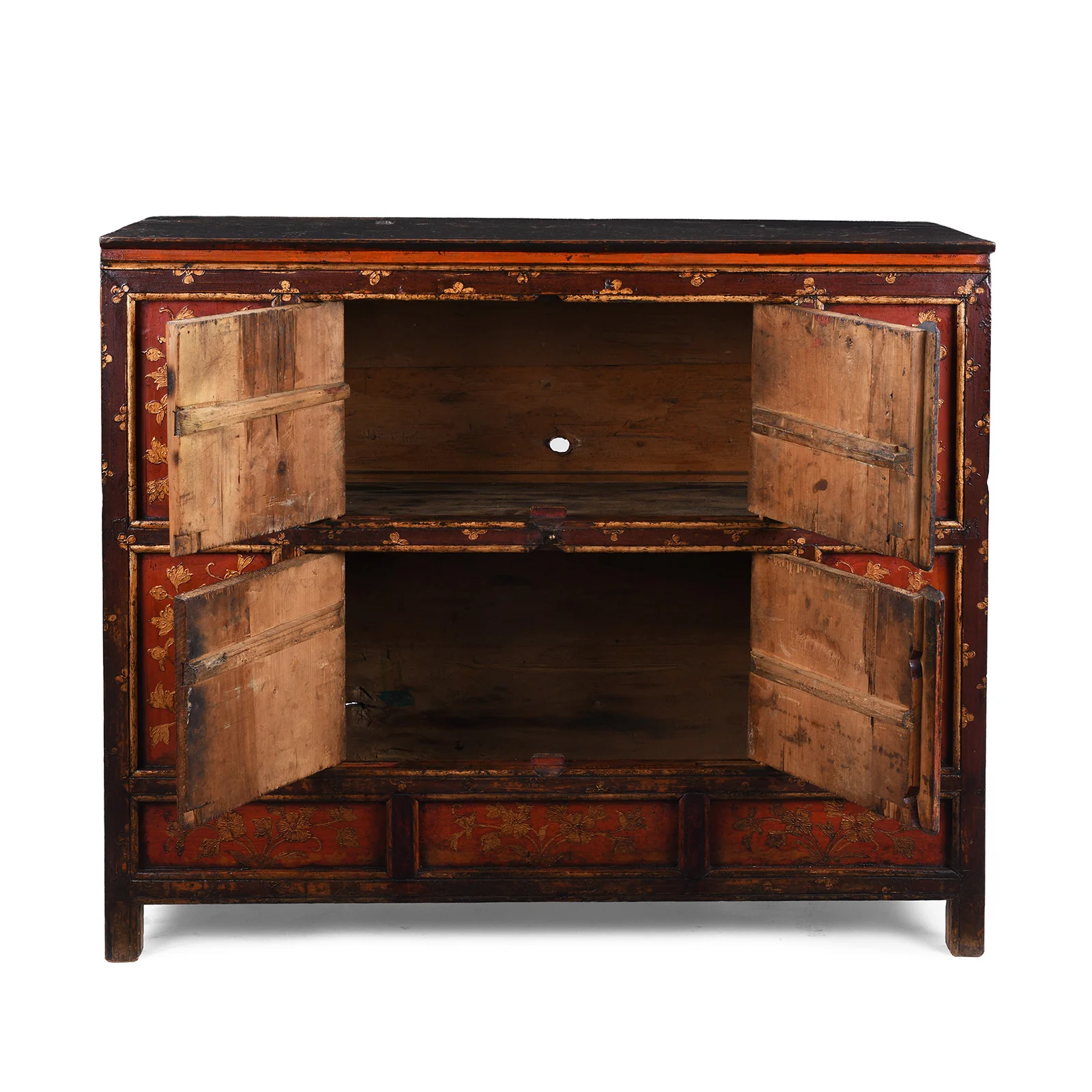
- Features: Kyungbur raised gesso work; mixed auspicious motifs (Precious Medicine, Auspicious Mirror, Parasol, Golden Fish); gold prunus blossom side panels; talismanic red-and-gold palette; traditional framed-panel carpentry; upper and lower storage compartments
- Condition: Beautiful, age-worn patina consistent with an original antique Tibetan altar cabinet
- Dimensions: W125 × D43.5 × H109 cm
A richly symbolic and beautifully preserved Tibetan altar cabinet with exceptional 19th-century painted decoration.
Details & Craftsmanship
Every detail has been carefully considered to bring you the perfect product.
Details & Craftsmanship
Every detail has been carefully considered to bring you the perfect product.
Details & Craftsmanship
Every detail has been carefully considered to bring you the perfect product.
Details & Craftsmanship
Every detail has been carefully considered to bring you the perfect product.
Details & Craftsmanship
Every detail has been carefully considered to bring you the perfect product.
Details & Craftsmanship
Every detail has been carefully considered to bring you the perfect product.
Details & Craftsmanship
Every detail has been carefully considered to bring you the perfect product.
Details & Craftsmanship
Every detail has been carefully considered to bring you the perfect product.
Details & Craftsmanship
Every detail has been carefully considered to bring you the perfect product.
Details & Craftsmanship
Every detail has been carefully considered to bring you the perfect product.
Description
This atmospheric Tibetan altar cabinet, dating from the 19th century, is a superb example of Central Tibetan painted furniture created for household Buddhist practice. Its deep red ground is enriched with luminous gold decoration, much of it executed in kyungbur — the raised gesso technique used in thangka art to give sacred motifs a subtle sculptural relief. The colour palette itself carries strong symbolic meaning: red represents vitality, protection, and the life-force, while gold signifies enlightenment, merit, and auspicious blessing.
The four central roundels contain a rare mixed set of auspicious emblems drawn from both the Eight Auspicious Substances (bkra shis rdzas brgyad) and the Eight Auspicious Symbols (bkra shis rtags brgyad). The top left roundel shows the Precious Medicine — a raised pellet resting on a tiered dish — symbolising vitality, healing, and longevity. The top right depicts the Auspicious Mirror, representing clarity, wisdom, and the cutting of illusion. Below, the bottom left shows the Parasol (gdugs), an emblem of protection, while the bottom right contains the Golden Fish (nya), symbolising liberation and fearlessness. These roundels are framed by scrolling goldwork and flanked by vertical panels painted with flowering prunus branches — plum or peach blossom — an auspicious motif associated with renewal, resilience, and long life.
The cabinet retains its original, richly worn surface, with the warm patina and age-softened pigment characteristic of genuine 19th-century Tibetan devotional furniture. Authentic painted altar cabinets of this calibre have become increasingly scarce, and this example — with its complex iconography, kyungbur relief work, and beautifully preserved red-and-gold palette — is a rare and highly collectable survivor.
- Origin: Central Tibet
- Date: 19th century
- Materials: Cedar or pine with original red lacquer and gold-painted decoration
- Features: Kyungbur raised gesso work; mixed auspicious motifs (Precious Medicine, Auspicious Mirror, Parasol, Golden Fish); gold prunus blossom side panels; talismanic red-and-gold palette; traditional framed-panel carpentry; upper and lower storage compartments
- Condition: Beautiful, age-worn patina consistent with an original antique Tibetan altar cabinet
- Dimensions: W125 × D43.5 × H109 cm
A richly symbolic and beautifully preserved Tibetan altar cabinet with exceptional 19th-century painted decoration.