Original: $1,655.20
-70%$1,655.20
$496.56The Story
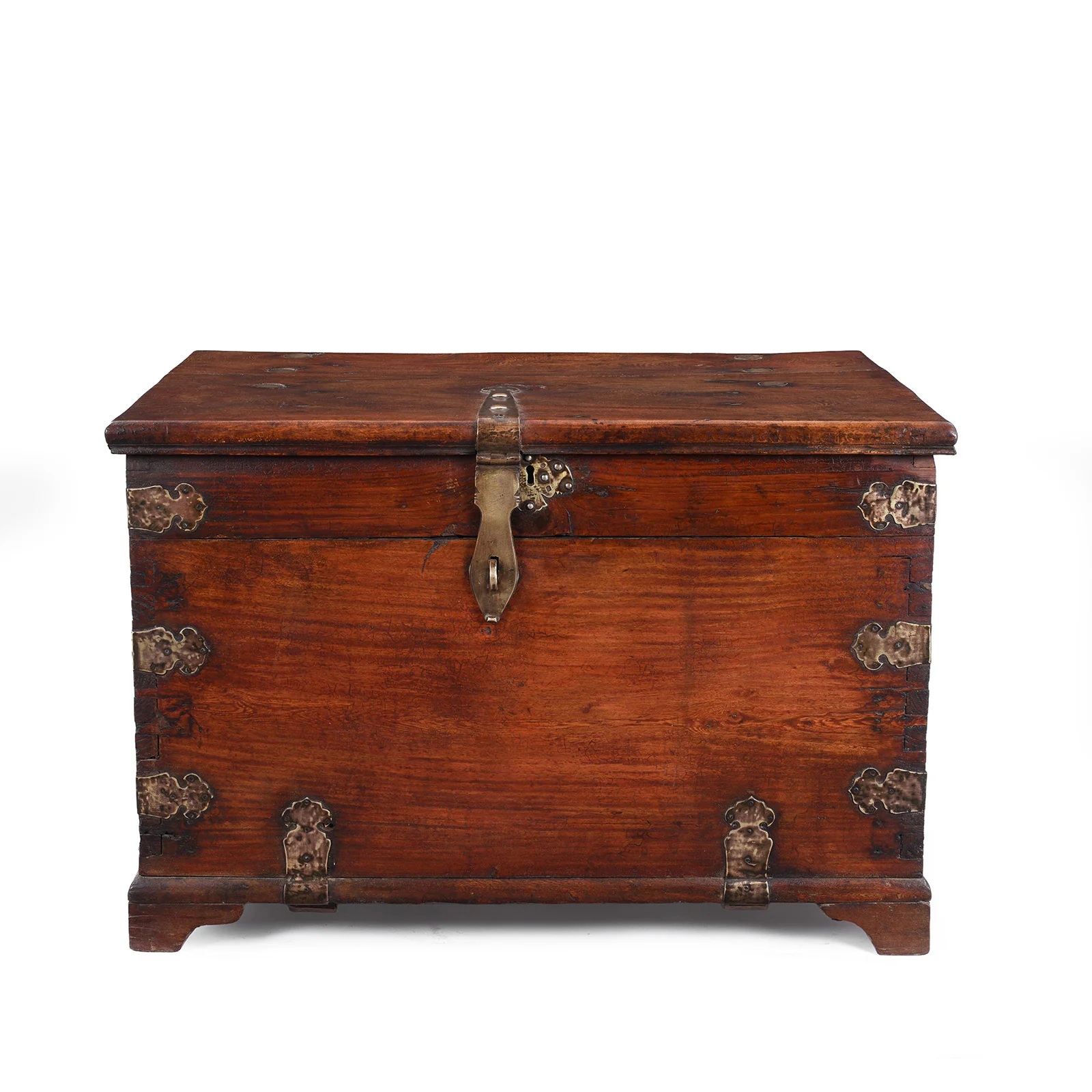
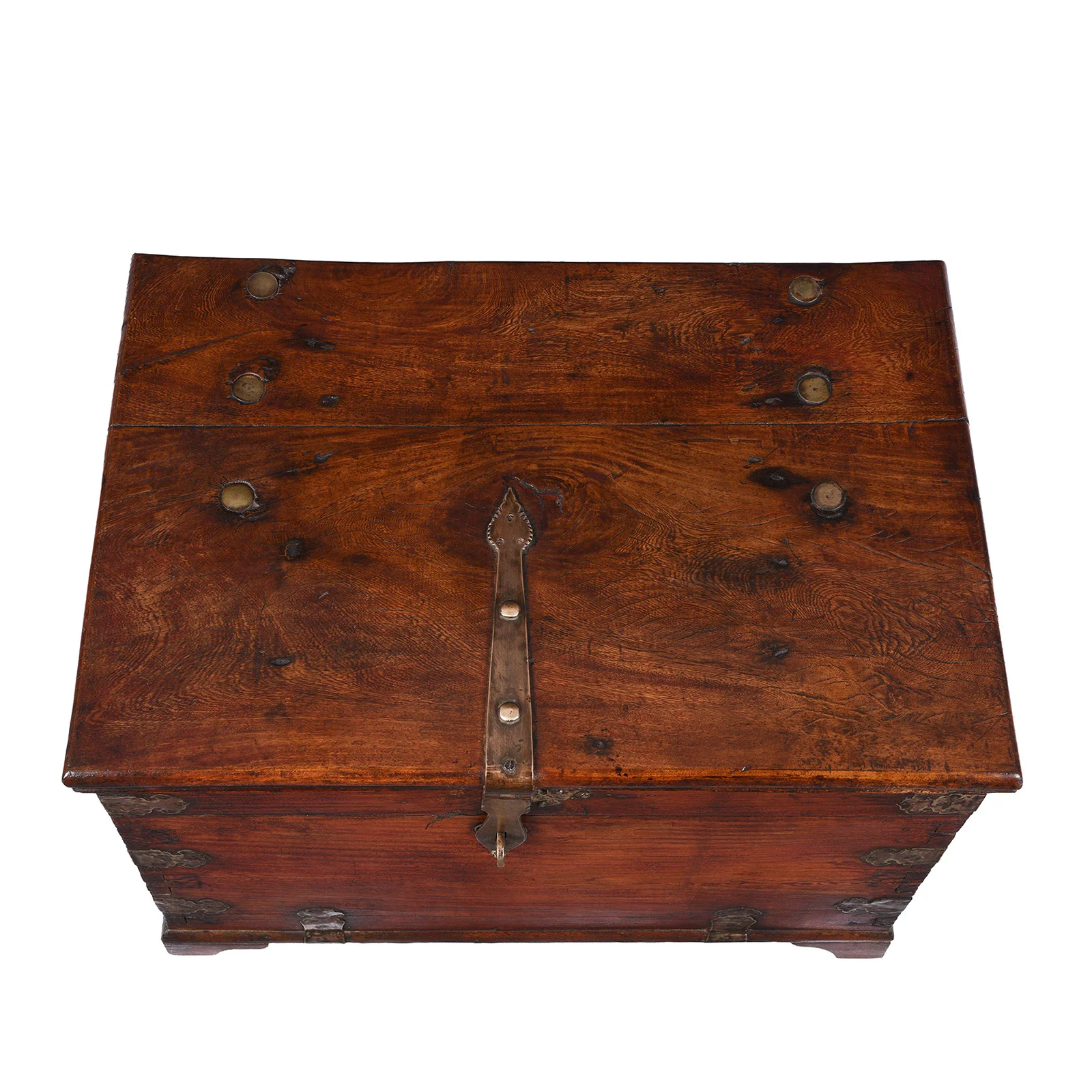
In over 45 years of travelling across Asia, we have encountered only a handful of chests like this—rare, early transnational trade chests whose origins span multiple cultures and maritime routes, yet remain scarcely documented. This extraordinary example would have been used aboard East Indiaman trading ships sailing between China, India, and Britain, making it a true survivor of the great trading age and a precursor to the more widely recognised red leather camphor chests of 19th-century Canton.
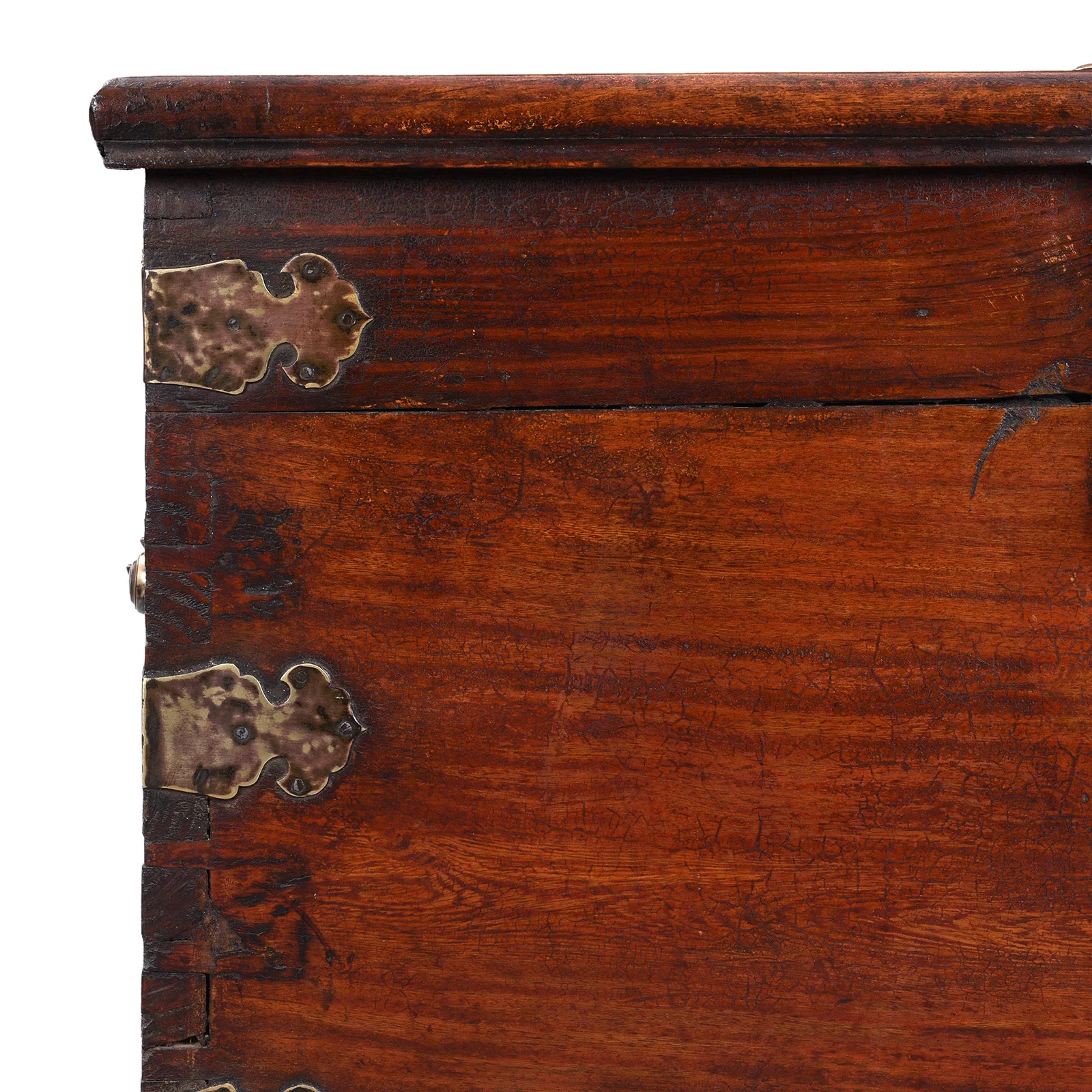
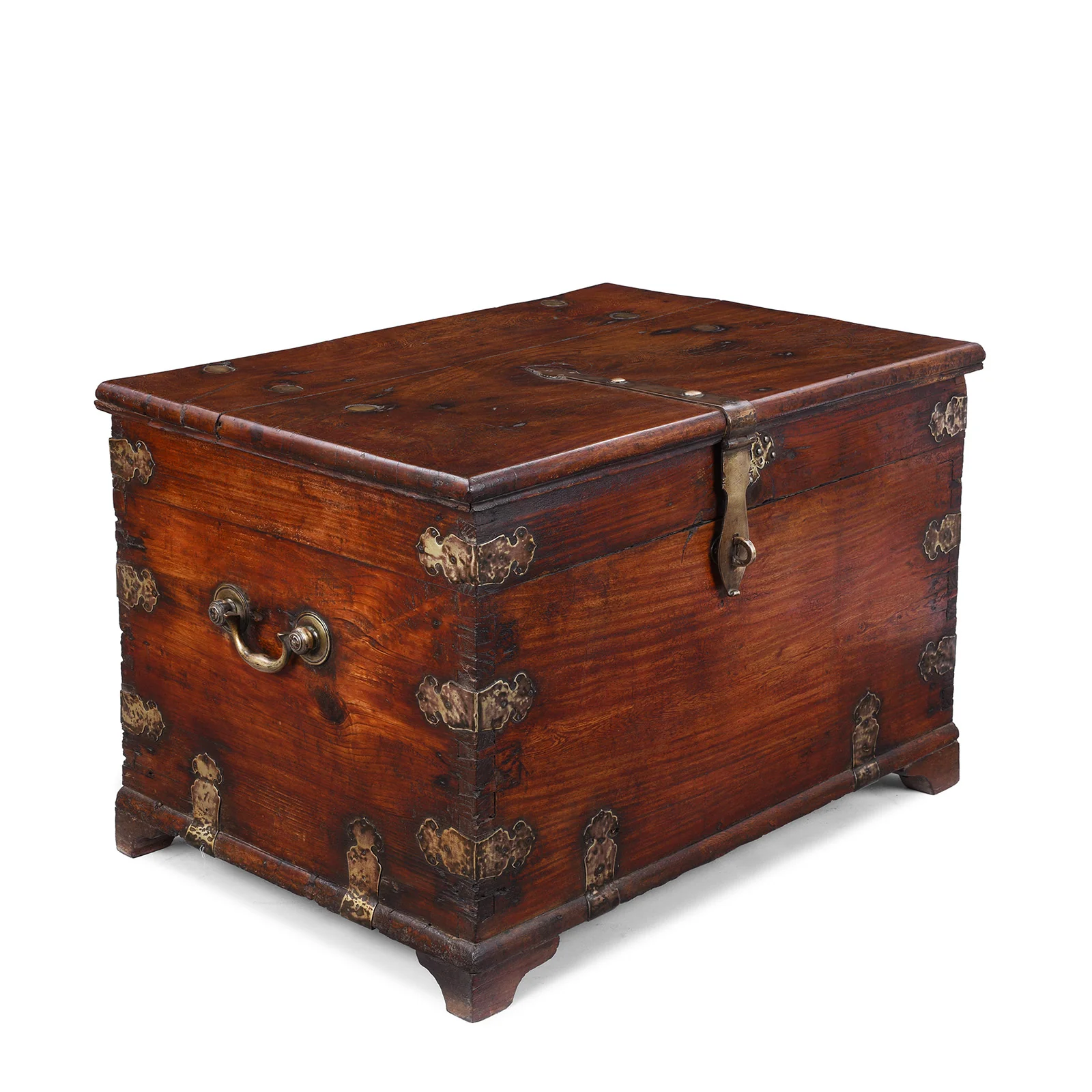
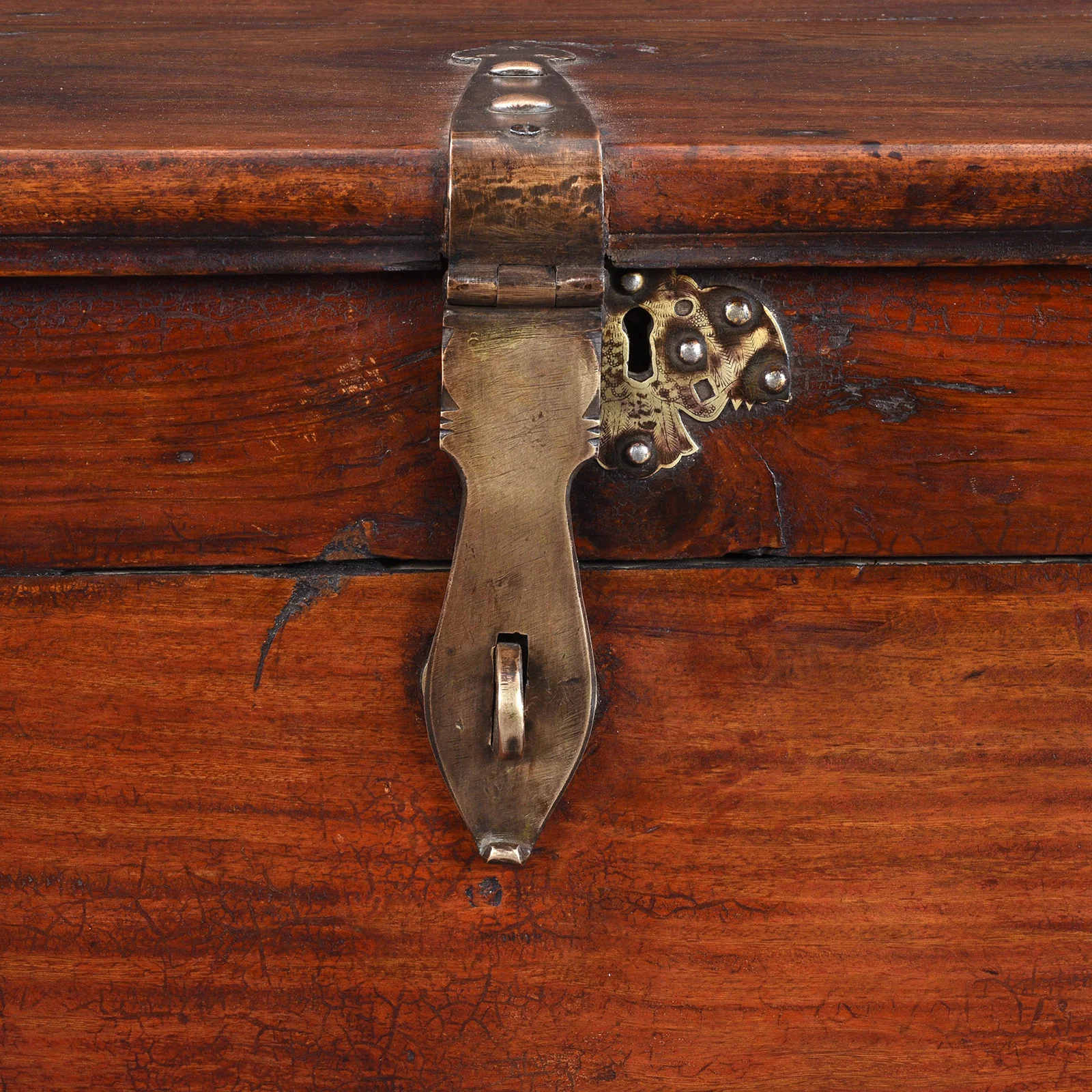
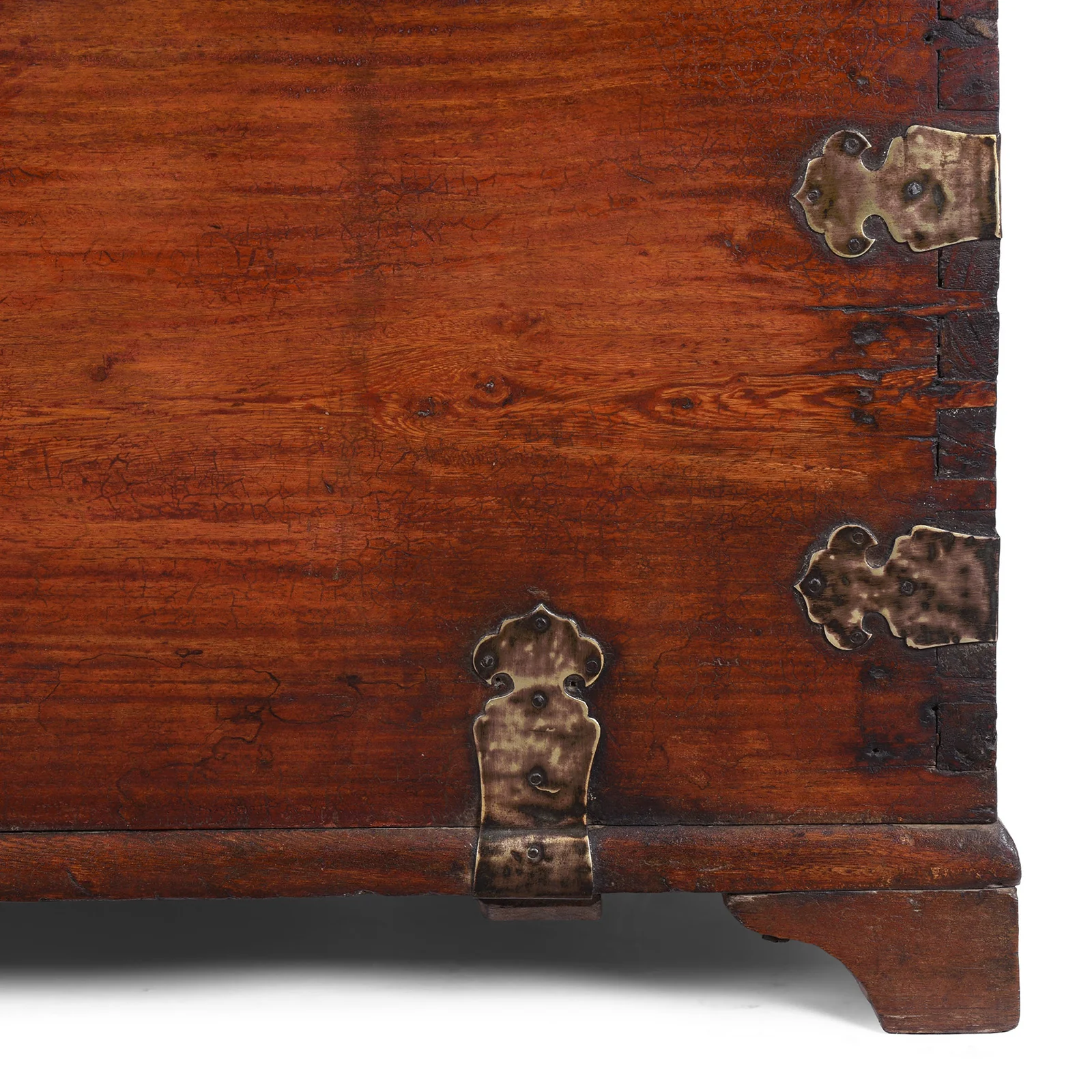
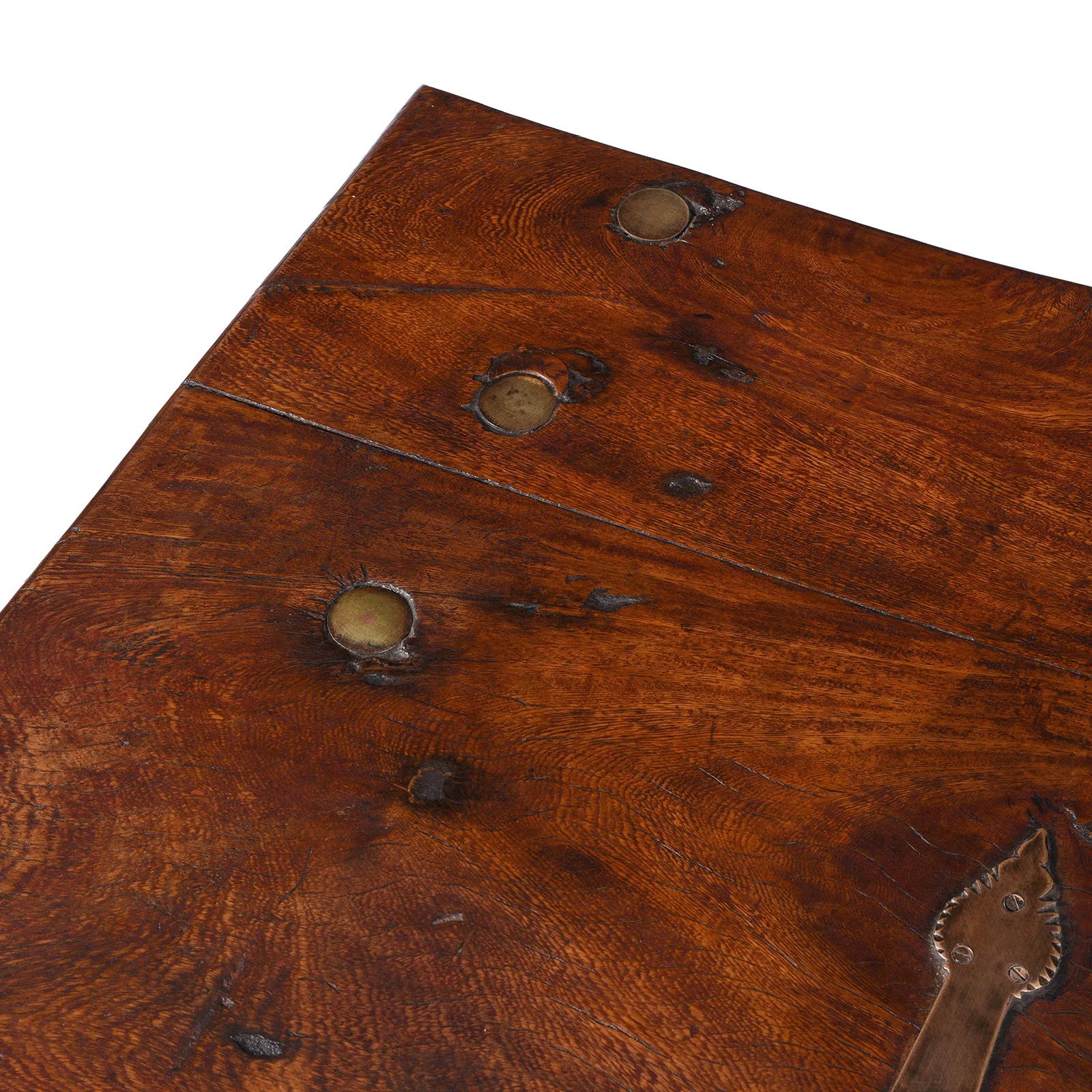
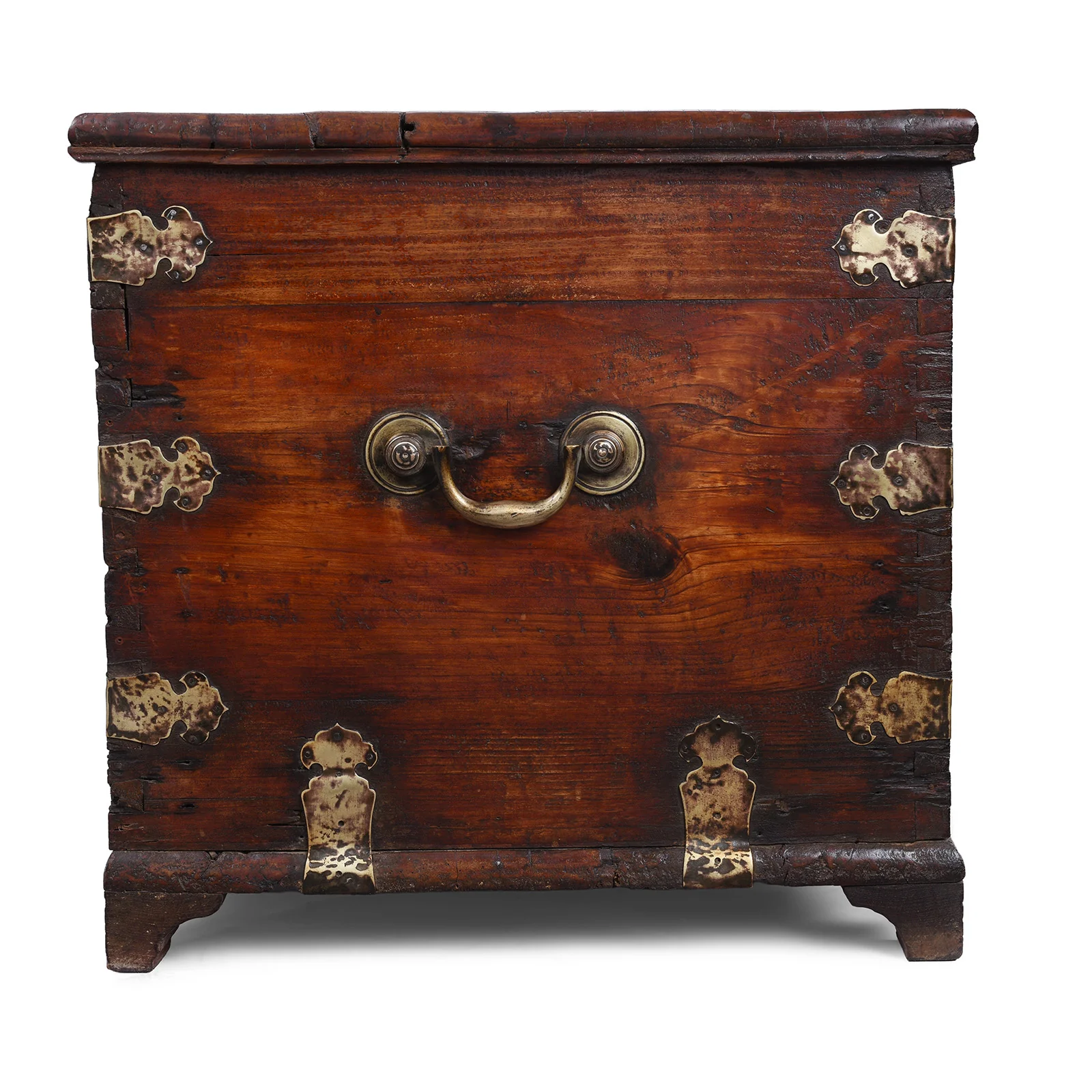
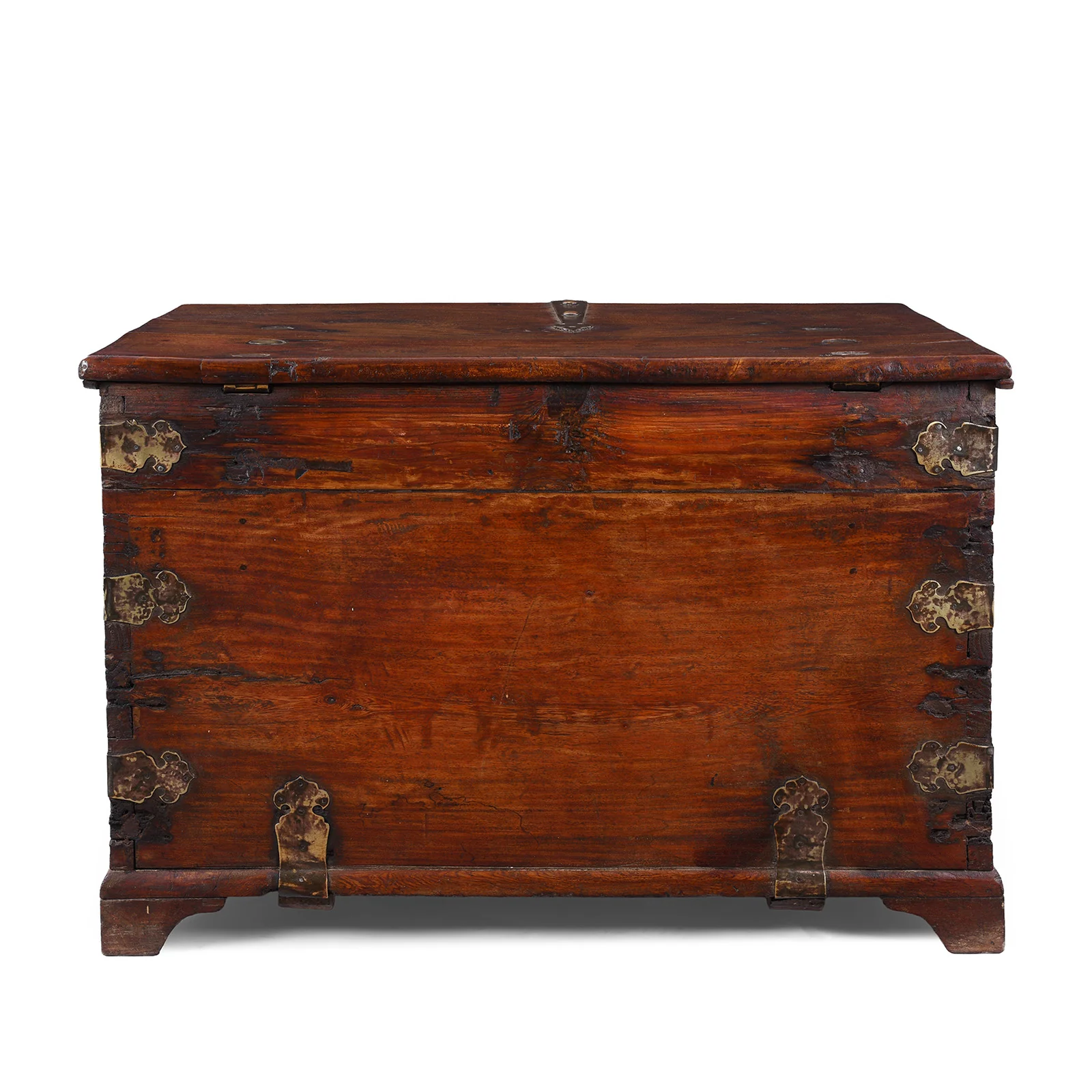
The form of the chest is distinctly Anglo-Indian, reflected in its proportions and robust construction, as well as the strong brass carrying handles. Yet it is embellished with details from several traditions. The brass corner mounts are shaped as ruyi—the ceremonial sceptre associated with good fortune and authority in Buddhist and Chinese symbolism. The lock plate, meanwhile, depicts a double-headed eagle, known in India as the Gandaberunda (or Berunda), a mythical bird of immense strength found throughout South Indian iconography. This blend of symbolism highlights the chest’s unique role as a container for personal goods travelling across—and between—worlds.
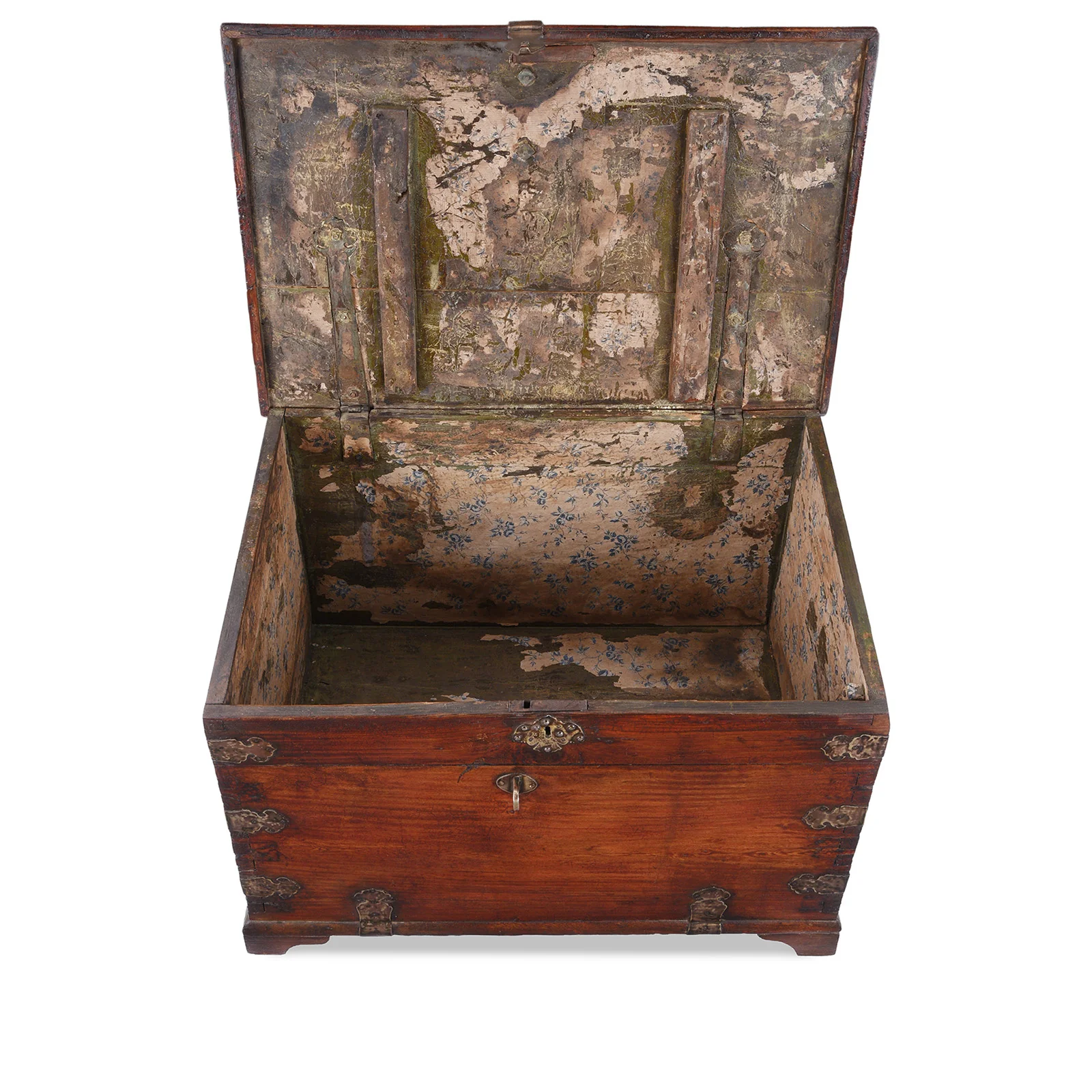
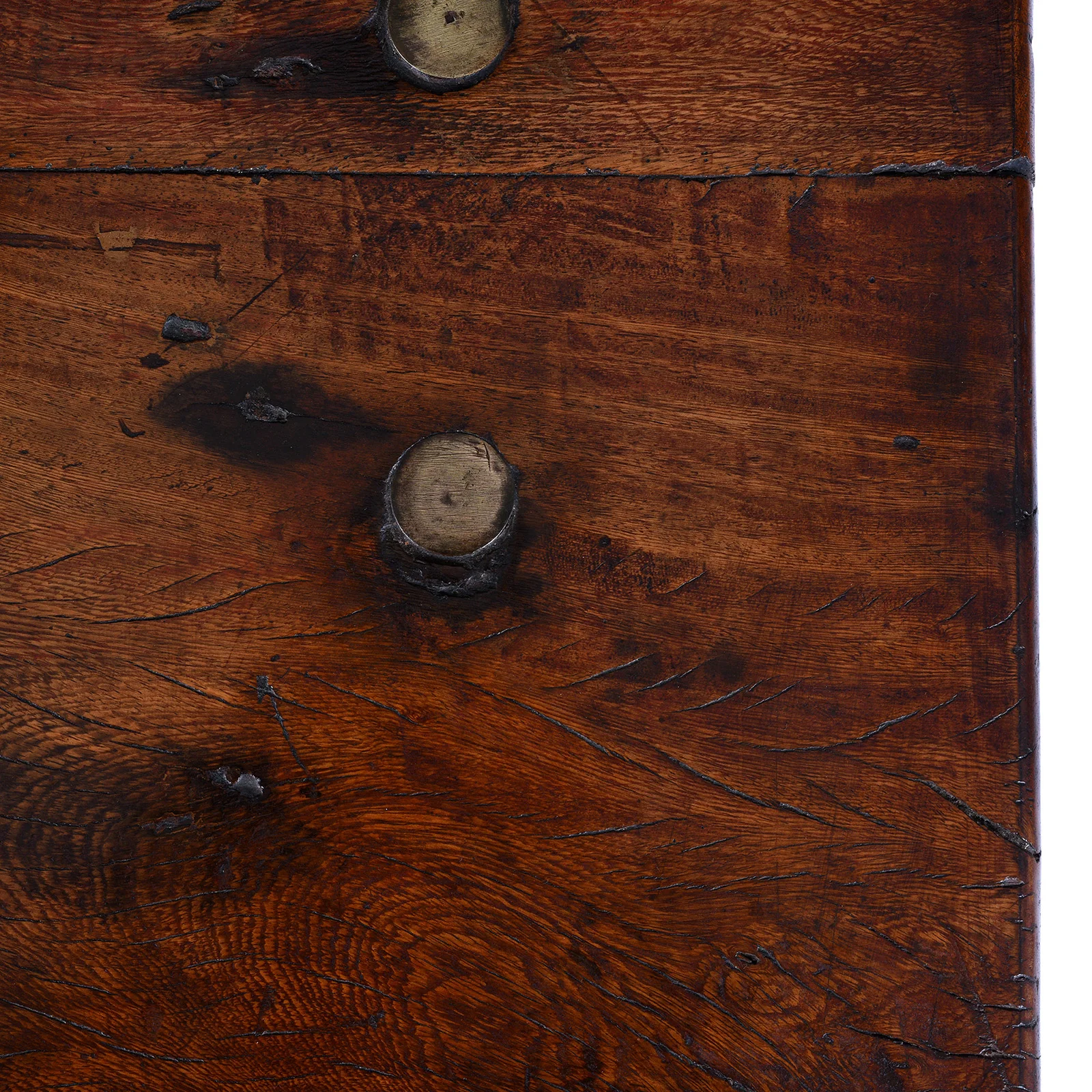
The interior retains remnants of its original decorative paper lining, now beautifully timeworn, adding to the historic depth and authenticity of the piece. With its glowing patina, brasswork shaped by different belief systems, and maritime history, this is a rare collector’s chest representing centuries of global exchange, craftsmanship and myth-making.
- Origin: Likely India for British colonial use; traded across China–India–Britain routes
- Date: Late 18th – early 19th century
- Materials: Hardwood with brass hardware; original paper lining remnants
- Features: Anglo-Indian form; ruyi-shaped brass corner mounts; Gandaberunda / Berunda lock plate; strong brass carrying handles; beautifully worn patina
- Condition: Age-related wear, losses to interior lining, and surface marks consistent with maritime use
- Dimensions: W94 x D65 x H63 cm
Details & Craftsmanship
Every detail has been carefully considered to bring you the perfect product.
Details & Craftsmanship
Every detail has been carefully considered to bring you the perfect product.
Details & Craftsmanship
Every detail has been carefully considered to bring you the perfect product.
Details & Craftsmanship
Every detail has been carefully considered to bring you the perfect product.
Details & Craftsmanship
Every detail has been carefully considered to bring you the perfect product.
Details & Craftsmanship
Every detail has been carefully considered to bring you the perfect product.
Details & Craftsmanship
Every detail has been carefully considered to bring you the perfect product.
Details & Craftsmanship
Every detail has been carefully considered to bring you the perfect product.
Details & Craftsmanship
Every detail has been carefully considered to bring you the perfect product.
Details & Craftsmanship
Every detail has been carefully considered to bring you the perfect product.
Description
In over 45 years of travelling across Asia, we have encountered only a handful of chests like this—rare, early transnational trade chests whose origins span multiple cultures and maritime routes, yet remain scarcely documented. This extraordinary example would have been used aboard East Indiaman trading ships sailing between China, India, and Britain, making it a true survivor of the great trading age and a precursor to the more widely recognised red leather camphor chests of 19th-century Canton.
The form of the chest is distinctly Anglo-Indian, reflected in its proportions and robust construction, as well as the strong brass carrying handles. Yet it is embellished with details from several traditions. The brass corner mounts are shaped as ruyi—the ceremonial sceptre associated with good fortune and authority in Buddhist and Chinese symbolism. The lock plate, meanwhile, depicts a double-headed eagle, known in India as the Gandaberunda (or Berunda), a mythical bird of immense strength found throughout South Indian iconography. This blend of symbolism highlights the chest’s unique role as a container for personal goods travelling across—and between—worlds.
The interior retains remnants of its original decorative paper lining, now beautifully timeworn, adding to the historic depth and authenticity of the piece. With its glowing patina, brasswork shaped by different belief systems, and maritime history, this is a rare collector’s chest representing centuries of global exchange, craftsmanship and myth-making.
- Origin: Likely India for British colonial use; traded across China–India–Britain routes
- Date: Late 18th – early 19th century
- Materials: Hardwood with brass hardware; original paper lining remnants
- Features: Anglo-Indian form; ruyi-shaped brass corner mounts; Gandaberunda / Berunda lock plate; strong brass carrying handles; beautifully worn patina
- Condition: Age-related wear, losses to interior lining, and surface marks consistent with maritime use
- Dimensions: W94 x D65 x H63 cm